
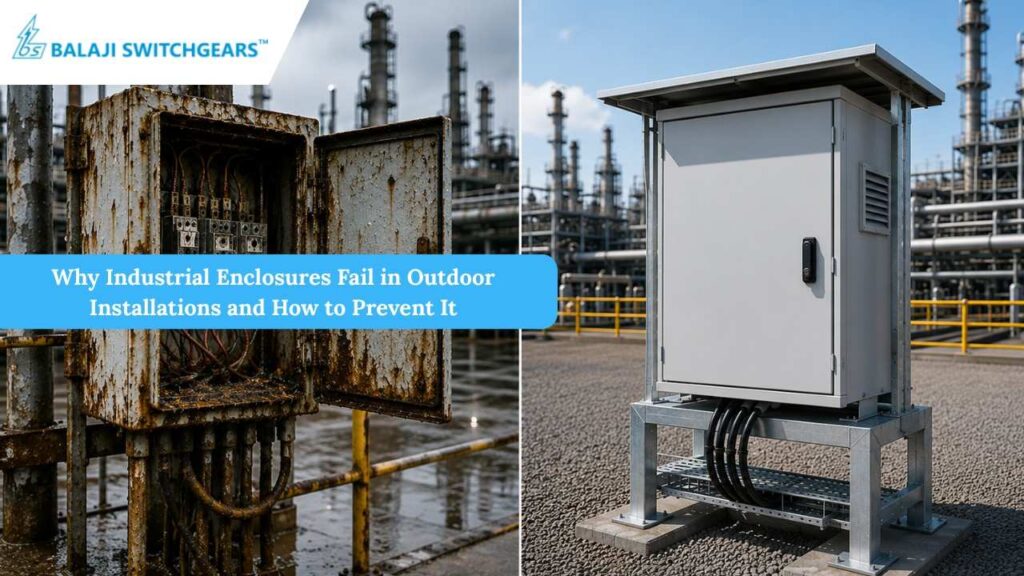
Industrial enclosures play a critical role in protecting electrical components from environmental exposure, mechanical damage, and operational risks. In outdoor installations, their importance becomes even greater, as they are directly exposed to harsh and unpredictable conditions such as heat, rain, dust, humidity, and pollution.
Despite their robust design, many industrial enclosures fail prematurely when installed outdoors. These failures are often not due to a single cause but a combination of design gaps, incorrect material selection, poor installation practices, and lack of maintenance.
Understanding why industrial enclosures fail in outdoor environments and how to prevent these issues is essential for ensuring long-term reliability, safety, and performance of electrical systems.
The Role of Industrial Enclosures in Outdoor Applications
Industrial enclosures are designed to house and protect electrical equipment such as switchgear, control panels, terminals, and communication devices.
In outdoor environments, enclosures must do more than just provide physical protection. They must also prevent the ingress of dust and water, withstand temperature variations, resist corrosion, and maintain internal conditions suitable for sensitive components.
When an enclosure fails to meet these requirements, the equipment inside becomes vulnerable, leading to operational disruptions and safety risks.
Exposure to Harsh Environmental Conditions
Outdoor installations expose enclosures to a wide range of environmental factors that can degrade their performance over time.
Constant exposure to sunlight can cause material fatigue, especially in enclosures made from lower-grade plastics. High temperatures can affect internal components, while sudden temperature changes can lead to condensation inside the enclosure.
Rain, humidity, and airborne pollutants further accelerate wear and tear. In industrial areas, chemical exposure can intensify corrosion, weakening the structure of the enclosure.
If the enclosure is not designed for such conditions, its protective capability reduces significantly.
Incorrect IP Rating Selection
One of the most common reasons for enclosure failure is the selection of an inappropriate Ingress Protection (IP) rating.
The IP rating defines the level of protection an enclosure provides against dust and water. For outdoor applications, higher IP ratings are generally required to prevent moisture and particle ingress.
However, in many cases, enclosures with lower IP ratings are used due to cost considerations or lack of proper assessment. This leads to water seepage, dust accumulation, and eventual damage to internal components.
Selecting the correct IP rating based on environmental conditions is essential for long-term performance.
Corrosion and Material Degradation
Material selection plays a critical role in determining the lifespan of an enclosure.
Metal enclosures, if not properly treated, can corrode over time when exposed to moisture and chemicals. Corrosion weakens the structure, affects sealing, and compromises protection.
Non-metallic enclosures may resist corrosion but can degrade under prolonged UV exposure if not designed for outdoor use.
Choosing materials that can withstand environmental stress, such as coated steel, stainless steel, or UV-resistant polymers is crucial for preventing premature failure.
Poor Sealing and Gasket Failure
Sealing is one of the most important aspects of an industrial enclosure.
Gaskets are used to create a seal between the enclosure door and body, preventing the entry of water and dust. Over time, gaskets can degrade due to temperature variations, UV exposure, and mechanical wear.
If the sealing is compromised, even a high IP-rated enclosure can fail.
Improper installation, frequent opening and closing, and lack of maintenance can accelerate gasket wear, leading to leakage and internal damage.
Condensation and Internal Moisture Build-Up
Even when water does not enter directly, moisture can still accumulate inside an enclosure due to condensation.
Temperature differences between the inside and outside environment can cause water vapor to condense on internal surfaces.
This moisture may cause corrosion of internal components, insulation failure, and short circuits.
Without proper ventilation or moisture control mechanisms, condensation becomes a hidden but serious issue in outdoor installations.
Improper Installation Practices
Installation plays a major role in the performance of industrial enclosures.
Even a high-quality enclosure can fail if it is installed incorrectly. Poor mounting, incorrect orientation, and inadequate sealing during cable entry can compromise protection.
Cable glands and entry points must be properly sealed to maintain the enclosure’s integrity. Any gaps or loose fittings can allow water and dust to enter.
Attention to installation details is essential for ensuring that the enclosure performs as intended.
Lack of Ventilation and Heat Management
Outdoor enclosures often house equipment that generates heat during operation.
If heat is not managed properly, internal temperatures can rise significantly, affecting the performance and lifespan of components.
In some cases, completely sealed enclosures trap heat, while in others, improper ventilation allows contaminants to enter.
Balancing heat dissipation and protection is critical. Solutions such as ventilation systems, filters, or cooling mechanisms can help maintain optimal internal conditions.
Mechanical Stress and Structural Damage
Outdoor enclosures are also exposed to mechanical stress from wind, vibration, and accidental impact.
Over time, these forces can weaken mounting structures, damage doors, or affect sealing mechanisms.
In industrial environments, exposure to heavy machinery and moving equipment increases the risk of physical damage.
Robust design and proper installation help reduce the impact of mechanical stress.
Preventing Enclosure Failures: A Practical Approach
Preventing enclosure failure requires a combination of proper selection, installation, and maintenance.
Choosing the right enclosure starts with understanding the environmental conditions. Factors such as temperature range, humidity, dust levels, and exposure to chemicals must be considered.
Selecting the correct IP rating and material ensures that the enclosure can withstand these conditions.
Proper installation practices, including correct sealing of cable entries and secure mounting, are equally important.
Regular inspection and maintenance help identify issues such as gasket wear, corrosion, or moisture build-up before they lead to failure.
By taking a proactive approach, industries can significantly improve the reliability of outdoor enclosures.
Long-Term Impact on System Reliability
The performance of an industrial enclosure directly affects the reliability of the entire electrical system.
Failures in enclosures can lead to equipment damage, system downtime, and increased maintenance costs.
In critical applications, such failures can disrupt operations and affect productivity.
Ensuring that enclosures are designed, installed, and maintained correctly helps protect equipment and maintain consistent performance.
A Smarter Approach to Outdoor Electrical Protection
Outdoor installations require more than standard solutions. They demand enclosures that are specifically designed to handle environmental challenges while maintaining internal stability.
By focusing on quality, proper design, and preventive maintenance, industries can avoid common failure points and ensure long-term system performance.
This approach not only improves reliability but also reduces operational risks and costs.
Conclusion
Industrial enclosures are a vital part of outdoor electrical systems, but their performance depends on how well they are selected, installed, and maintained.
Failures often occur due to environmental exposure, incorrect IP ratings, poor material selection, sealing issues, and lack of proper installation practices.
By understanding these factors and taking preventive measures, industries can significantly improve the lifespan and reliability of their enclosures.
A well-planned approach to enclosure selection and maintenance ensures that electrical systems remain protected, efficient, and safe even in challenging outdoor conditions.For industries looking to enhance the reliability of their outdoor installations, working with experienced partners like Balaji Switchgears ensures access to dependable solutions that support long-term performance and operational stability.