
Low voltage switchgear systems are the backbone of modern electrical distribution in industrial and commercial environments. They are responsible for controlling, protecting, and isolating electrical circuits, ensuring that operations run safely and efficiently.
While much attention is given to major components such as circuit breakers, relays, and busbars, one critical area is often overlooked accessories used within the switchgear system. These include cable lugs, terminal blocks, wiring ducts, connectors, glands, insulation materials, and mounting hardware.
In many cases, non-standard or locally sourced accessories are used to reduce costs or simplify procurement. At first glance, this may not seem like a significant concern. However, these small decisions can introduce hidden risks that compromise the safety, reliability, and performance of the entire system. Understanding these risks is essential for anyone involved in the design, installation, or maintenance of low voltage switchgear systems.
Understanding the Role of Accessories in Switchgear Systems
Accessories may not be the most visible components in a switchgear panel, but they play a crucial role in ensuring proper functionality.
They provide secure electrical connections, maintain insulation integrity, support cable management, and ensure mechanical stability. Every connection point, every termination, and every internal layout depends on these supporting components.
When accessories meet proper standards, they contribute to consistent performance and long-term reliability. However, when non-standard accessories are used, the entire system becomes vulnerable to hidden weaknesses.
What Are Non-Standard Accessories?
Non-standard accessories are components that do not comply with recognized industry standards or lack proper certification and quality assurance. These may include products that are not tested for electrical performance, lack material consistency, or do not meet specified tolerances required for switchgear applications.
While they may appear similar to standard components, their internal quality, durability, and performance characteristics can vary significantly.
Compromised Electrical Connections
One of the most immediate risks of using non-standard accessories is poor electrical connectivity.
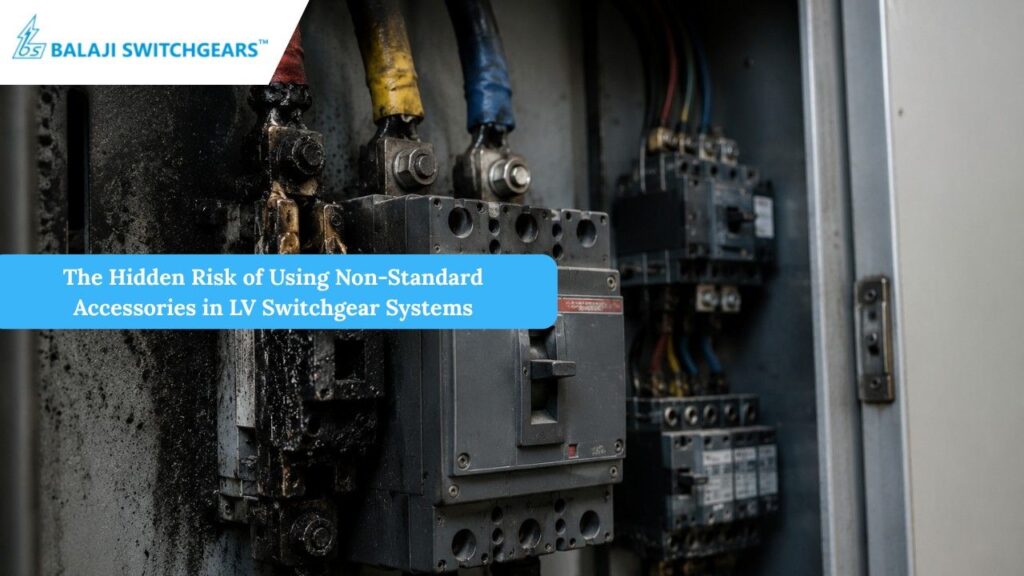
Cable lugs, connectors, and terminals must provide low-resistance, stable connections. If the material quality is poor or dimensions are not precise, the connection may become loose or develop higher resistance over time. This leads to localized heating, which can damage insulation and increase the risk of faults.
In-high load conditions, such weak connections can become critical failure points within the system.
Increased Risk of Overheating
Overheating is a common consequence of substandard components. Non-standard accessories may not be designed to handle the rated current of the system. As a result, they generate excess heat during operation.
This heat can accumulate within the panel, affecting nearby components and reducing overall system efficiency.
Over time, continuous overheating can lead to insulation breakdown, component failure, and even fire hazards.
Reduced Insulation Integrity
Insulation is a key factor in ensuring electrical safety.
Standard accessories are designed with materials that provide adequate insulation resistance and withstand environmental stress. Non-standard components may use inferior insulation materials that degrade faster under temperature variations, humidity, or electrical stress.
This can lead to leakage currents, short circuits, and increased risk of electrical accidents.
Mechanical Weakness and Poor Durability
Switchgear systems are subject to mechanical stress due to vibrations, thermal expansion, and operational handling. Accessories such as mounting supports, cable ties, and ducts must maintain structural integrity under these conditions.
Non-standard accessories may lack the required strength and durability, leading to mechanical failure over time.
Loose components, broken supports, or misaligned connections can affect system stability and increase maintenance requirements.
Impact on Compliance and Certification
Compliance with industry standards is essential for low voltage switchgear systems. Switchgear panels are often required to meet specific standards related to safety, performance, and testing.
Using non-standard accessories can compromise the overall compliance of the system. Even if major components meet standards, the presence of uncertified accessories can lead to rejection during inspections or audits.
This is particularly critical in industries where certification is mandatory for operation or export.
Difficulty in Troubleshooting and Maintenance
Non-standard accessories often lack proper documentation and uniformity.
During maintenance or troubleshooting, this creates challenges for engineers and technicians. Identifying specifications, sourcing replacements, and ensuring compatibility become difficult.
This increases downtime and maintenance effort, especially in large systems where consistency is important.
Standardized components, on the other hand, simplify maintenance and ensure availability of compatible replacements.
Shortened System Lifespan
The cumulative effect of using non-standard accessories is a reduction in overall system lifespan. Even if failures do not occur immediately, the gradual degradation caused by poor connections, overheating, and insulation issues weakens the system over time.
This leads to frequent repairs, unexpected failures, and the need for early replacement of components.
In contrast, using standard-compliant accessories ensures consistent performance and longer operational life.
Hidden Costs Behind Low Initial Savings
Cost is often the main reason for choosing non-standard accessories. While they may offer lower upfront pricing, the long-term costs can be significantly higher.
These include increased maintenance, energy losses, downtime, and potential damage to critical equipment.
In many cases, the savings from using low-cost components are outweighed by the expenses incurred due to failures and inefficiencies. A quality-focused approach proves to be more economical in the long run.
The Importance of Standardization in Switchgear Design
Standardization ensures consistency, reliability, and safety in electrical systems. Using certified and tested accessories ensures that every component performs as expected under defined conditions.
It also simplifies design, installation, and maintenance processes, making the system more predictable and manageable. In complex industrial environments, where reliability is critical, standardization becomes a key factor in system performance.
A Practical Approach to Avoiding These Risks
Avoiding the risks associated with non-standard accessories requires a conscious and informed approach.
It begins with selecting components that comply with recognized standards and are suitable for the intended application. Attention should be given to material quality, electrical ratings, and compatibility with other components. Proper documentation and traceability should also be ensured, as they play a vital role in audits and maintenance. By prioritizing quality over short-term cost savings, industries can build systems that are reliable, safe, and efficient.
Conclusion
Low voltage switchgear systems depend not only on major components but also on the quality of supporting accessories that hold the system together. Using non-standard accessories may seem like a minor compromise, but it introduces hidden risks that can affect performance, safety, and reliability. From poor electrical connections and overheating to compliance issues and increased maintenance, the impact can be significant over time. For industries aiming to build dependable and efficient electrical systems, focusing on standard-compliant components is essential.
By adopting a quality-driven approach and working with experienced solution providers like Balaji Switchgears, businesses can ensure that every part of their switchgear system contributes to long-term performance, safety, and operational stability.