
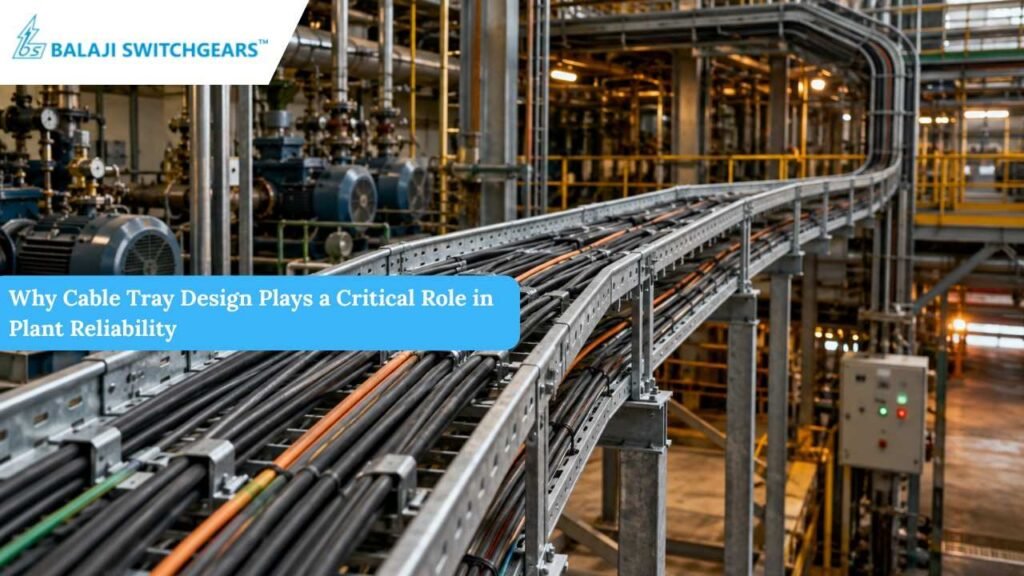
Modern industrial plants depend on an extensive network of electrical and communication cables to keep operations running smoothly. These cables power machinery, connect automation systems, enable communication between equipment, and support critical safety systems. While significant attention is often given to switchgear, circuit breakers, control panels, and automation equipment, one essential component is frequently overlooked during planning and maintenance: the cable tray system.
A cable tray is much more than a structure used to support cables. It forms the backbone of an organized electrical distribution system and directly impacts the reliability, safety, efficiency, and longevity of an industrial facility. A poorly designed cable tray system can lead to cable damage, overheating, maintenance challenges, and unexpected equipment failures. Conversely, a well designed cable tray system helps ensure continuous operations, reduces maintenance costs, and supports future expansion.
For industries that operate around the clock, plant reliability is a key performance indicator. Every minute of unplanned downtime can result in production losses, delayed deliveries, increased maintenance costs, and reduced profitability. This makes cable tray design a strategic investment rather than a simple installation decision.
In this blog, we explore why cable tray design plays such an important role in plant reliability and what factors industries should consider while designing an effective cable management system.
Understanding the Purpose of a Cable Tray
A cable tray is a structural support system used to route and protect electrical cables throughout an industrial or commercial facility. Instead of placing cables directly on the floor or inside enclosed conduits, cable trays provide an organized pathway that keeps cables secure, accessible, and properly supported.
Cable trays are commonly used for carrying:
Power cables
Control cables
Instrumentation cables
Communication cables
Data cables
Fire alarm cables
Automation cables
Depending on the application, cable trays are available in several configurations such as ladder type, perforated type, wire mesh, channel type, and solid bottom trays.
Choosing the right type is only one part of the process. The overall design, routing, spacing, load capacity, and installation quality are equally important.
Why Cable Tray Design Matters More Than Many Realize
Many electrical failures that occur in industrial facilities are not caused by defective cables. Instead, they are often the result of poor cable management.
Improper tray layouts, overcrowded cables, inadequate support, insufficient ventilation, or poor routing can gradually damage cable insulation and reduce system performance.
Over time, these small issues become major operational problems.
A properly designed cable tray system protects electrical infrastructure while making future maintenance easier and safer.
It creates an organized electrical network that supports reliable plant operations for many years.
Improves Cable Protection
Industrial environments expose cables to several risks.
Heavy equipment
Mechanical impact
Vibration
Dust
Moisture
Chemicals
Heat
If cables are left unsupported or routed improperly, they become vulnerable to physical damage.
A properly designed cable tray system provides continuous support and protects cables from unnecessary stress.
It also prevents cables from sagging, bending excessively, or rubbing against sharp edges.
This significantly increases cable life and reduces unexpected failures.
Prevents Cable Overheating
Heat is one of the biggest enemies of electrical cables.
As electrical current flows through conductors, heat is naturally generated.
If cables are tightly packed together without sufficient spacing, heat cannot dissipate effectively.
Excessive heat can result in:
Reduced insulation life
Lower cable efficiency
Premature ageing
Unexpected breakdowns
Fire hazards
Proper cable tray design ensures adequate spacing between cables and allows sufficient airflow around them.
This natural ventilation helps maintain safe operating temperatures and improves overall system reliability.
Reduces Downtime During Maintenance
Maintenance teams frequently need access to electrical cables for inspections, troubleshooting, repairs, or upgrades.
Poorly managed cables make this process extremely difficult.
Technicians may spend hours identifying the correct cable among hundreds of improperly routed conductors.
Well designed cable trays organize cables systematically.
This makes identification faster and significantly reduces maintenance time.
Shorter maintenance durations translate directly into lower production downtime.
Supports Better Heat Dissipation
Industrial plants often operate high current power cables continuously.
Without adequate ventilation, cable temperatures continue to rise.
Cable trays designed with open structures promote natural airflow around the cables.
This cooling effect helps maintain cable performance while reducing the risk of overheating.
Better heat management also improves energy efficiency by reducing electrical losses.
Makes Future Expansion Easier
Industrial facilities rarely remain the same throughout their lifetime.
New machinery is installed.
Production lines expand.
Automation systems are upgraded.
Additional communication networks are introduced.
A well planned cable tray system allows future cables to be added without major reconstruction.
This flexibility reduces installation costs during expansion projects.
It also prevents overcrowding that commonly occurs when future growth is ignored during initial design.
Improves Electrical Safety
Electrical safety should always be a top priority.
Poor cable management increases the likelihood of:
Cable insulation damage
Short circuits
Electrical faults
Arc flash incidents
Fire hazards
Proper cable tray design separates different cable types and minimizes the possibility of interference or accidental damage.
Clear routing also allows maintenance personnel to work more safely.
Safer electrical systems contribute to overall plant reliability.
Enhances Cable Identification
Large industrial plants may contain thousands of metres of electrical cables.
Without proper organization, locating a specific cable becomes extremely challenging.
An organized tray layout allows cables to be:
Clearly labelled
Properly grouped
Easily traced
Quickly inspected
Efficient cable identification speeds up fault diagnosis and minimizes repair time.
Reduces Electromagnetic Interference
Industrial plants contain various types of electrical cables.
Power cables carry high current.
Instrumentation cables transmit sensitive signals.
Communication cables transfer digital information.
If these cables are installed too closely together, electromagnetic interference can affect signal quality.
Proper tray design separates power and control cables to reduce interference.
This improves communication reliability and protects automation systems from signal disturbances.
Supports Reliable Automation Systems
Modern manufacturing depends heavily on automation.
Programmable Logic Controllers
Variable Frequency Drives
Sensors
Industrial robots
Distributed Control Systems
All rely on uninterrupted electrical and communication connections.
Cable tray design plays a vital role in ensuring these systems receive stable power and accurate data transmission.
Reliable cable management directly contributes to reliable automation.
Simplifies Troubleshooting
Electrical faults cannot always be prevented.
However, they should be located and resolved as quickly as possible.
An organized cable tray system allows maintenance engineers to trace cables efficiently.
Instead of searching through tangled cable bundles, technicians can quickly isolate affected circuits.
Faster troubleshooting means faster restoration of operations.
Supports Compliance with Safety Standards
Industrial electrical installations must comply with various national and international standards.
Proper cable tray design helps meet requirements related to:
Cable spacing
Load capacity
Fire safety
Mechanical support
Accessibility
Electrical segregation
Compliance improves both operational safety and regulatory acceptance.
Factors That Influence Cable Tray Design
Several engineering considerations affect cable tray performance.
Load Capacity
The tray must safely support both current and future cable loads.
Overloaded trays can deform over time.
Cable Fill Ratio
Overcrowding reduces ventilation and complicates maintenance.
Adequate spare capacity should always be maintained.
Tray Material
Material selection depends on environmental conditions.
Common options include:
Galvanized steel
Hot dip galvanized steel
Aluminium
Stainless steel
Glass fibre reinforced plastic
Each offers different advantages depending on corrosion resistance, strength, and installation environment.
Support Spacing
Supports must be installed at appropriate intervals to prevent tray sagging.
Proper support improves structural stability.
Environmental Conditions
Outdoor installations may require protection against:
Rain
Humidity
UV exposure
Corrosion
Chemical environments
Indoor industrial environments may present different challenges.
The tray design should match operating conditions.
Choosing the Right Cable Tray Type
Different applications require different tray designs.
Ladder Cable Tray
Ideal for heavy power cables.
Provides excellent ventilation.
Suitable for industrial plants.
Perforated Cable Tray
Offers balanced support and airflow.
Suitable for mixed cable applications.
Wire Mesh Tray
Commonly used for communication and data cables.
Provides flexibility and easy installation.
Channel Cable Tray
Used for smaller cable quantities.
Ideal for instrumentation systems.
Selecting the appropriate tray type improves both performance and maintenance efficiency.
Common Cable Tray Design Mistakes
Several common errors reduce plant reliability.
Ignoring future cable additions
Overloading trays
Poor cable segregation
Inadequate ventilation
Insufficient structural support
Improper routing
Using unsuitable materials
Lack of accessibility for maintenance
Avoiding these mistakes significantly improves long term performance.
The Role of Cable Trays in Smart Manufacturing
As industries adopt Industry 4.0 technologies, electrical infrastructure is becoming increasingly sophisticated.
Smart factories rely on:
Automation
Industrial networking
Energy monitoring
IoT devices
Real time communication
All these technologies require dependable cable management.
Cable tray systems provide the organized infrastructure necessary to support digital transformation.
Without reliable cable pathways, smart manufacturing cannot operate efficiently.
Long Term Cost Benefits
Although cable trays represent only a small portion of overall electrical installation costs, they deliver significant long term value.
Benefits include:
Lower maintenance expenses
Reduced downtime
Longer cable lifespan
Improved worker safety
Faster future upgrades
Better energy efficiency
Higher operational reliability
The return on investment often exceeds the initial installation cost many times over.
Why Professional Design Matters
Cable tray design should never be treated as an afterthought.
Experienced electrical engineers consider numerous factors during system planning, including electrical loads, cable routing, equipment locations, maintenance accessibility, environmental conditions, and future expansion.
A professionally designed system ensures that every component works together to support reliable plant operations.
It also reduces the risk of expensive modifications after installation.
Conclusion
Cable tray systems may not receive the same attention as switchgear, transformers, or control panels, but they are fundamental to the reliability of every industrial electrical installation. A well designed cable tray system protects cables, improves ventilation, enhances safety, simplifies maintenance, supports future expansion, and contributes significantly to uninterrupted plant operations.
As industries continue to embrace automation, digitalisation, and smart manufacturing, the importance of robust cable management will only continue to grow. Investing in proper cable tray design today helps organisations avoid costly failures tomorrow while ensuring a safer, more efficient, and future ready electrical infrastructure.
For industries seeking dependable electrical solutions, Balaji Switchgears offers high quality cable management products and expert guidance tailored to modern industrial applications. With extensive experience in industrial power distribution, automation, and electrical infrastructure, Balaji Switchgears helps businesses build reliable, organised, and efficient systems that support long term plant performance and operational excellence.