
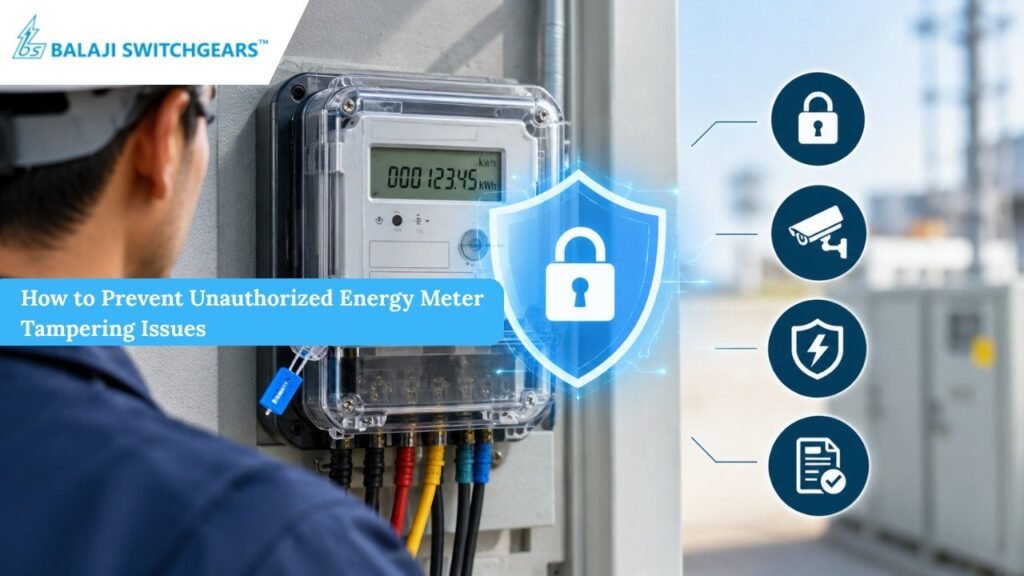
If you ask any power utility engineer what keeps them up at night, meter tampering will come up before you finish the question. It’s not a rare, occasional problem; it’s a steady, ongoing drain on revenue that shows up as unexplained losses, unbalanced load curves, and billing disputes that never seem to have a clean answer. In India alone, distribution losses linked to illegal connections and tampered meters have historically run into a significant share of total generation, and the financial toll from electricity theft nationally has been estimated in the billions of dollars every year. Behind those big numbers is a very simple, very human problem: whenever there’s a meter measuring something valuable, someone will eventually try to interfere with it.
What makes this topic worth a proper, detailed look is that meter tampering has changed shape. It used to be a fairly crude affair: a reversed connection here, a magnet held against a spinning disc there. Today’s meters are digital, networked, and far harder to fool in the obvious ways, but that hasn’t eliminated tampering. It’s just pushed it toward smarter, subtler methods, and pushed the countermeasures to be smarter too. Understanding both sides of that arms race is the only way to build a meter and metering system that actually holds up in the field.
Understanding How Tampering Actually Happens
Before talking about prevention, it’s worth being honest about the methods still in use, because the prevention strategy has to map directly onto them.
Physical bypass remains the oldest trick in the book, running a jumper connection around the meter so part of the load never gets registered at all. Reverse connection, where the incoming and outgoing terminals are swapped so the meter either under-records or spins backward, is another long-standing method that older electromechanical meters were especially vulnerable to.
With electronic and smart meters, the tricks have gotten more technical. Strong magnets are held against the meter housing in an attempt to saturate the current sensor and suppress readings. High-voltage electrostatic discharge is deliberately introduced into the meter through a spark generator, aiming to damage or reset the metering electronics. Some tampering attempts target the communication and firmware layer directly trying to interfere with calibration data stored in the meter’s memory, or disrupting the data being sent back to the utility so consumption looks lower than it actually is.
Then there’s the low-tech but still very common category: meter seal tampering, enclosure tampering, and unauthorized access to the meter box itself, often to manually interfere with wiring or swap components without the utility’s knowledge.
Every one of these methods leaves some kind of footprint, if the meter and the surrounding system are designed to look for it.
Building Tamper Resistance Into the Meter Itself
The first and most effective layer of defence is the meter’s own hardware and firmware design. Modern meters are increasingly built with this as a core design requirement rather than an afterthought, and a few features have become close to standard in serious installations:
- Magnetic tamper detection – built-in sensors that identify abnormal magnetic fields near the current sensing element and flag the event immediately, often triggering an alarm before the tampering attempt can meaningfully affect the reading.
- Electrostatic discharge protection – dedicated ESD circuitry that channels high-voltage spark attempts safely to ground, protecting the sensitive metering electronics from both damage and manipulation.
- Cover and terminal tamper switches – mechanical or optical sensors that detect when the meter’s outer cover or terminal block has been opened, logging the exact time of the event.
- Reverse current and phase reversal detection – firmware that recognizes when current or voltage phasing has been deliberately reversed and records it as a tamper condition rather than silently under-billing.
- Secure, encrypted calibration data – storing calibration coefficients in protected memory that can’t be casually rewritten, so the meter’s fundamental accuracy can’t be altered from outside.
- Event logging with time-stamping – the ability to store a meaningful number of tamper events, along with when they started and when they were resolved, so utilities have a clear, defensible record rather than a vague suspicion.
None of these features work in isolation. A meter with magnetic tamper detection but no secure logging still leaves a gap, because the event gets noticed but never properly recorded for enforcement or billing correction. Good meter selection means looking at the full set of protections together, not picking one headline feature off a spec sheet.
Sealing, Installation, and Physical Security Still Matter
For all the emphasis on electronics, a huge share of tampering incidents still start with basic physical access. A meter that’s easy to reach, poorly sealed, or installed in a location with no oversight is an invitation, no matter how sophisticated its internal tamper detection is.
Tamper-evident seals on the meter body and terminal cover are the most basic, and still one of the most effective, physical safeguards any attempt to remove or bypass them leaves visible evidence. Locking meter boxes, properly secured cable entries, and installation at a height or location that discourages casual interference all reduce the opportunity for tampering before it even starts. For higher-risk installations industrial connections, high-load commercial premises, or areas with a known history of theft CCTV coverage of the meter location and periodic physical inspection add another practical layer that electronics alone can’t replace.
Advanced Metering Infrastructure Changes the Game
The move toward Advanced Metering Infrastructure, or AMI, has genuinely shifted how tampering gets caught. Instead of a meter sitting isolated until someone manually reads it months later, a smart meter is in continuous or near-continuous communication with the utility’s head-end system.
This means a tamper event doesn’t just sit logged inside the meter waiting to be discovered; it can be pushed out immediately to the data concentrator and then to the utility’s monitoring system, sometimes triggering an automatic alert or even a remote load disconnection depending on how the utility has configured its response. Consumption pattern analysis adds another layer on top of that: sudden, unexplained drops in recorded usage, especially ones that don’t correlate with any change in the customer’s declared load, are exactly the kind of anomaly that automated analytics can flag for a field inspection long before it would otherwise be noticed.
The trade-off is that AMI systems bring their own attack surface; the communication link and the head-end software need to be secured just as carefully as the meter hardware, because a vulnerability in the network layer can undermine even a well-protected meter.
What Utilities and Facility Owners Can Do Beyond the Meter
Technology solves part of the problem, but process and policy close the rest of the gap.
Regular physical audits of meter installations, especially in areas with a history of irregular consumption patterns, catch the tampering methods that don’t leave a clean electronic signature. Clear, consistently enforced penalties for detected tampering recorded, documented, and followed through on changing the incentive calculation for anyone considering it. Staff and field technician training matters too, since a meter reader or maintenance engineer who knows what tamper indicators actually look like will catch far more issues than one relying purely on automated alerts. And keeping meter firmware and communication protocols updated closes off vulnerabilities that get identified over time, the same way any connected system needs ongoing maintenance rather than a one-time setup.
Getting the Fundamentals Right From Installation Onward
Preventing energy meter tampering isn’t a single fix; it’s a layered approach that starts with choosing a meter genuinely built for tamper resistance, continues through proper physical installation and sealing, and is backed by a monitoring system that actually acts on the alerts it receives. Skip any one of these layers, and the others end up carrying more weight than they were designed to.
At Balaji Switchgears, we work with industrial and commercial customers across India to specify metering and monitoring solutions that hold up to this kind of scrutiny, sourcing genuine, properly certified meters and protection equipment from established partners like Schneider Electric and Elmeasure. If unexplained consumption patterns, recurring billing disputes, or ageing meter installations are a concern at your facility, the team at Balaji Switchgears can help you review your current metering setup and recommend the right tamper-resistant solution for your load profile.
You can explore our full range of metering, switchgear, and automation products, or get in touch directly with Balaji Switchgears, at balajiswitchgears.com. Getting the metering fundamentals right the first time is far cheaper than chasing losses after the fact.