
Electrical control panels have become more sophisticated than ever before. Modern industries rely on automation, intelligent control systems, sensors, drives, PLCs, and communication devices that require secure and reliable electrical connections. While components like MCCBs, relays, contactors, and switchgear often receive most of the attention, one small but critical component quietly ensures the reliability of the entire electrical system: the DIN rail terminal block.
Terminal blocks are the connection points where electrical circuits are joined safely and efficiently. They simplify wiring, improve organization, make maintenance easier, and enhance overall electrical safety. Choosing the right terminal block can significantly impact panel performance, installation time, maintenance efficiency, and long term reliability.
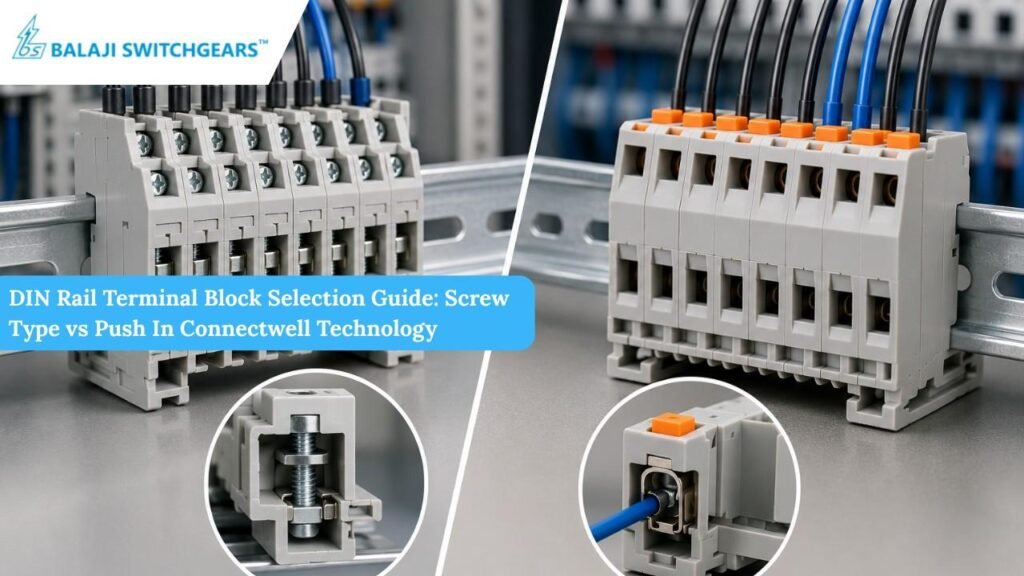
Today, the two most common connection technologies used in DIN rail terminal blocks are screw type terminals and push in technology. Both have their own advantages and are widely used across industrial applications. Manufacturers such as Connectwell have developed high quality terminal block solutions using both technologies to meet the changing needs of modern industries.
For panel builders, OEMs, electrical contractors, and system integrators, understanding the differences between these two technologies is essential. This guide explains how each type works, their advantages, limitations, and how to choose the right solution for your application.
Understanding DIN Rail Terminal Blocks
DIN rail terminal blocks are modular electrical connectors mounted on standardized DIN rails inside electrical panels.
Their primary purpose is to provide secure electrical connections while keeping panel wiring organized and easy to maintain.
Instead of directly joining wires together, terminal blocks create structured connection points that simplify installation and future modifications.
They are commonly used in:
Industrial control panels
Power distribution panels
Machine automation systems
PLC panels
Building management systems
Renewable energy installations
HVAC systems
Process industries
Data centres
Because modern control panels often contain hundreds of wiring connections, selecting the appropriate terminal block technology becomes an important design decision.
Why Terminal Block Selection Matters
Terminal blocks may appear to be small components, but they directly influence the reliability of the entire electrical system.
Poor quality or improperly selected terminal blocks can lead to:
Loose electrical connections
Voltage drops
Overheating
Electrical faults
Unexpected downtime
Increased maintenance
Longer installation time
Difficult troubleshooting
Selecting the correct technology improves both installation efficiency and long term system reliability.
What Are Screw Type Terminal Blocks?
Screw type terminal blocks are the traditional and most widely used connection method.
They use a metal screw to clamp the conductor firmly against a current carrying bar.
Once tightened correctly, the wire remains securely fixed inside the terminal.
This technology has been trusted for decades across numerous industrial applications because of its strong mechanical connection and proven reliability.
Many industries continue to prefer screw terminals for heavy duty electrical installations.
Advantages of Screw Type Terminal Blocks
Strong Mechanical Connection
The screw applies consistent pressure to hold the conductor firmly in place.
This provides excellent mechanical stability.
Suitable for Large Conductors
Screw terminals are ideal for applications involving higher current ratings and larger cable sizes.
Proven Technology
Industries worldwide have successfully used screw terminals for many years.
Their long service history makes them a trusted solution.
Wide Application Range
They are suitable for both control circuits and power distribution applications.
High Current Carrying Capacity
Many heavy industrial installations continue to rely on screw terminals because of their ability to handle demanding electrical loads.
Limitations of Screw Type Terminal Blocks
Although reliable, screw type terminals have certain limitations.
Installation requires tools.
Each screw must be tightened carefully.
Improper tightening may result in either loose or excessively tight connections.
Loose connections can generate heat over time.
Periodic inspection is also recommended to ensure proper tightening, especially in applications exposed to vibration.
Installation time is generally longer compared to modern connection technologies.
What Is Push In Terminal Technology?
Push in technology represents the next generation of terminal block design.
Instead of using screws, these terminal blocks use an advanced spring mechanism that securely grips the conductor when it is inserted into the terminal.
No screwdriver is required for inserting solid or ferruled conductors.
The spring automatically applies the correct clamping force.
Connectwell has introduced advanced push in terminal block solutions designed to improve wiring speed, reliability, and maintenance efficiency.
These products are becoming increasingly popular among OEMs and panel builders looking to reduce assembly time while maintaining high connection quality.
Advantages of Push In Technology
Faster Installation
One of the biggest advantages of push in technology is speed.
Electricians simply insert the prepared conductor into the terminal.
The spring mechanism locks the wire automatically.
This significantly reduces wiring time.
For large industrial panels containing hundreds of connections, the time savings can be substantial.
Consistent Clamping Force
Unlike screw terminals that depend on manual tightening, push in technology applies uniform pressure automatically.
This ensures consistent electrical connections across every terminal.
Reduced Human Error
Since there are no screws to tighten, installers cannot accidentally under tighten or over tighten the connection.
This improves installation quality and reduces future maintenance issues.
Excellent Resistance to Vibration
Spring based connections maintain constant pressure even under continuous vibration.
This makes push in terminals particularly suitable for industries such as:
Automotive manufacturing
Railways
Material handling systems
Machine tools
Heavy industrial machinery
Lower Maintenance Requirements
Since there are no screws to retighten, maintenance becomes much simpler.
The spring continuously maintains the required contact pressure throughout the product’s life.
Limitations of Push In Technology
Although push-in terminals offer many advantages, they may not always be the preferred solution for every application.
Certain heavy power applications may still favour traditional screw terminals depending on cable size and project requirements.
Additionally, technicians unfamiliar with push in technology may require minimal training during initial adoption.
However, once implemented, most users quickly appreciate the simplicity and efficiency of the system.
Screw Type vs Push In Technology
Understanding the differences helps in selecting the right solution.
Installation Speed
Push in terminals offer significantly faster installation.
Screw terminals require manual tightening of every connection.
Tool Requirement
Push in terminals require minimal tools during installation.
Screw terminals require screwdrivers or torque tools.
Maintenance
Push-in terminals require very little maintenance.
Screw terminals may require periodic inspection depending on the application.
Vibration Performance
Push in technology performs exceptionally well under vibration because the spring continuously maintains contact pressure.
Screw terminals can gradually loosen if not installed correctly or if subjected to prolonged vibration.
Installation Consistency
Push in technology provides consistent connection quality regardless of the installer.
Screw terminals depend on correct tightening torque.
Long Term Reliability
Both technologies provide reliable electrical performance when installed correctly.
The choice depends primarily on application requirements, installation practices, and maintenance preferences.
When Should You Choose Screw Type Terminal Blocks?
Screw type terminals remain an excellent choice for applications involving:
Heavy current circuits
Large conductor sizes
Traditional industrial installations
Existing panel designs
Projects requiring familiar installation methods
Applications where maintenance personnel are experienced with screw technology
Many process industries continue using screw terminals because of their long established performance.
When Should You Choose Push In Connectwell Technology?
Push in technology is ideal for:
High volume panel manufacturing
OEM production
Automation systems
PLC panels
Control panels
Machine building
Smart factories
Applications requiring faster installation
Projects focused on reducing labour costs
Modern industrial environments increasingly prefer push in technology because it improves productivity while maintaining excellent reliability.
Why Connectwell Push In Technology Is Gaining Popularity
Connectwell has become one of the leading manufacturers of terminal connection solutions by combining engineering expertise with modern manufacturing.
Their push in technology offers several advantages.
Reliable spring connection technology
Compact terminal block design
Easy conductor insertion
Simple conductor removal
Excellent vibration resistance
Reduced installation time
Low maintenance requirements
High quality materials
Compatibility with modern industrial control panels
These features make Connectwell push in terminal blocks a preferred choice for panel builders seeking higher productivity and dependable electrical performance.
Factors to Consider Before Selecting a Terminal Block
Choosing between screw type and push in technology depends on several practical considerations.
Nature of the Application
Power distribution applications may have different requirements than automation panels.
Installation Time
Projects with tight production schedules benefit greatly from faster wiring solutions.
Maintenance Strategy
Facilities aiming to reduce maintenance requirements often prefer spring connection technology.
Operating Environment
High vibration environments typically benefit from spring based connections.
Future Expansion
Panels expected to undergo modifications should use technologies that simplify future wiring additions.
Installer Experience
Training and familiarity with the selected technology should also be considered.
Best Practices for Reliable Terminal Block Installation
Regardless of the technology selected, following good installation practices is essential.
Use correctly sized conductors.
Prepare conductors properly before insertion.
Avoid excessive mechanical stress on cables.
Clearly label all terminals.
Follow manufacturer recommendations.
Maintain organised cable routing.
Inspect completed wiring before energising the panel.
These practices significantly improve long term system reliability.
The Future of Terminal Connection Technology
Industrial automation continues to evolve rapidly.
Panel manufacturers increasingly focus on reducing assembly time while improving connection quality.
Push in technology aligns perfectly with these objectives.
As smart manufacturing, Industry 4.0, and digital factories become more common, faster installation methods and maintenance free connections will continue to gain popularity.
However, screw type terminal blocks will remain an important solution for many heavy duty industrial applications.
Rather than replacing one technology completely, both will continue serving different application requirements.
Conclusion
Selecting the right DIN rail terminal block is a critical decision that affects installation efficiency, maintenance requirements, and long term electrical reliability. While screw type terminal blocks continue to offer proven performance for traditional industrial applications, push in technology is redefining modern panel building with faster installation, consistent connection quality, and lower maintenance requirements.
Understanding the strengths of each technology allows OEMs, panel builders, and electrical engineers to make informed decisions based on their specific application needs rather than relying on a one size fits all approach.
For industries looking to build reliable, efficient, and future ready electrical panels, Balaji Switchgears offers a comprehensive range of Connectwell DIN rail terminal block solutions, including both screw type and advanced push in technologies. Backed by technical expertise and trusted industrial brands, Balaji Switchgears helps customers select the right connection solutions that improve panel quality, enhance operational reliability, and support the evolving demands of modern industrial automation.