
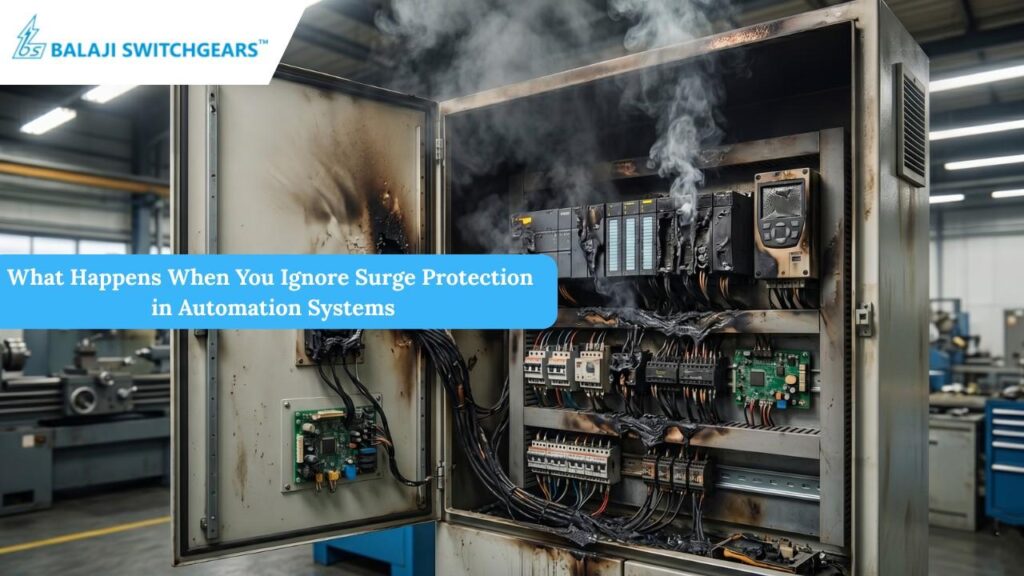
In today’s industrial landscape, automation systems form the backbone of production. From programmable controllers and drives to sensors and communication networks, every process depends on stable and uninterrupted electrical performance. While significant investment is made in advanced equipment and control technologies, one critical aspect that is often underestimated is surge protection.
Electrical surges are sudden increases in voltage that can occur due to lightning strikes, switching operations, or internal system disturbances. These events may last only a fraction of a second, but their impact on sensitive automation equipment can be severe.
Ignoring surge protection does not always lead to immediate failure. In many cases, the damage is gradual, hidden within the system, and only becomes visible when performance starts to decline or unexpected failures begin to occur. Understanding the consequences of neglecting surge protection is essential for maintaining reliable and efficient industrial operations.
Understanding Electrical Surges in Automation Systems
An electrical surge is a transient overvoltage that exceeds the normal operating limits of a system. These surges can originate from external sources such as lightning or from internal activities like switching heavy loads, starting motors, or faults within the electrical network.
Automation systems are particularly vulnerable because they rely on electronic components that operate at low voltage levels. Devices such as programmable controllers, sensors, communication modules, and drives are designed for precision, not for handling sudden voltage spikes.
When a surge enters the system, it travels through power lines, signal cables, and communication networks, affecting multiple components simultaneously. Without proper protection, this can lead to both immediate and long-term damage.
Immediate Effects of Ignoring Surge Protection
One of the most noticeable outcomes of ignoring surge protection is sudden equipment failure. A strong surge can damage internal circuits of electronic devices, rendering them non-functional.
In automation systems, this may result in:
- Unexpected shutdown of machines
- Failure of controllers or drives
- Loss of communication between system components
- Malfunction of sensors and actuators
Such failures can bring production to an abrupt halt, especially in systems where processes are interconnected.
Even if the equipment does not fail completely, it may behave unpredictably. Signals may become unstable, control logic may be disrupted, and machines may operate incorrectly.
Hidden Damage and Gradual Degradation
Not all surge-related damage is immediate. In many cases, repeated exposure to smaller surges causes gradual deterioration of components.
This hidden damage affects internal circuitry over time, weakening insulation, degrading semiconductor devices, and reducing overall reliability. The system may continue to operate, but performance becomes inconsistent. Issues such as intermittent faults, unexplained errors, and reduced efficiency begin to appear.
Because the damage is not visible, it is often difficult to trace back to surge-related causes. This leads to prolonged troubleshooting and recurring maintenance issues.
Impact on Sensitive Automation Equipment
Automation systems rely on precision. Even small deviations in voltage or signal quality can affect performance.
Devices such as programmable controllers and communication modules are highly sensitive to electrical disturbances. A surge can disrupt their operation, leading to data loss or incorrect processing of signals. In systems where timing and accuracy are critical, such disruptions can have serious consequences. Production processes may become unstable, leading to quality issues and operational inefficiencies.
Sensors, which provide input data to control systems, are also affected. A surge can alter their readings or damage their circuits, resulting in incorrect feedback and improper machine actions.
Increased Downtime and Production Loss
Downtime is one of the most direct consequences of ignoring surge protection.
When automation systems fail due to surge-related issues, production stops until the problem is identified and resolved. In complex systems, this process can take considerable time, especially if the root cause is not immediately clear. Repeated failures further increase downtime, creating a cycle of interruptions that affects overall productivity.
In industries where continuous operation is essential, even short periods of downtime can lead to significant financial losses.
Higher Maintenance Costs
Ignoring surge protection often results in higher maintenance expenses over time.
Frequent equipment failures require replacement of components, increased labor for troubleshooting, and additional testing to restore system functionality. Because surge damage may affect multiple components simultaneously, maintenance efforts become more complex and time-consuming.
In many cases, the cost of repeated repairs far exceeds the cost of implementing proper surge protection in the first place.
Risk to Communication Networks
Modern automation systems depend heavily on communication networks for data exchange between devices.
Surges can travel through communication lines and disrupt network performance. This may lead to:
- Loss of data
- Communication errors
- System synchronization issues
When communication networks are affected, the entire automation system may become unreliable. Machines may not receive correct instructions, leading to operational inconsistencies.
Safety Concerns in Industrial Environments
Electrical surges do not only affect equipment—they can also pose safety risks.
Sudden equipment failure can create hazardous situations, especially in environments where machines operate at high speeds or handle heavy loads. In some cases, surge-induced faults may lead to overheating, short circuits, or even fire hazards.
Ensuring proper surge protection is therefore not just a matter of performance, but also of safety.
Long Term Impact on System Reliability
Reliability is a key requirement in industrial automation. Systems are expected to operate consistently over long periods with minimal interruptions.
Ignoring surge protection compromises this reliability. Even if failures are not frequent, the risk remains constant. Over time, the cumulative effect of surge exposure reduces the lifespan of equipment. Components wear out faster, and the system becomes more prone to failure.
This affects not only operational efficiency but also long-term planning and investment.
The Importance of a Proactive Approach
Addressing surge protection is not about reacting to failures, it is about preventing them.
A proactive approach involves understanding the sources of surges and implementing measures to protect the system.
This includes proper system design, selection of suitable protection devices, and ensuring that all critical points in the electrical network are safeguarded.
By taking preventive action, industries can avoid unexpected disruptions and maintain stable operations.
Building a More Resilient Automation System
A well-protected automation system is more resilient to external and internal disturbances.
With proper surge protection in place, equipment operates within safe limits, reducing the risk of damage. Signals remain stable, communication networks function reliably, and machines perform as expected.
This stability improves overall efficiency and reduces the need for frequent maintenance.
In high-demand industrial environments, resilience is a key factor in achieving consistent performance.
The Balaji Switchgears Perspective
In modern industrial applications, attention to detail makes a significant difference in system performance.
At Balaji Switchgears, the focus is on providing electrical solutions that support reliability, safety, and long-term efficiency. This includes understanding the importance of surge protection in automation systems.
By emphasizing proper system design and component selection, industries can minimize risks associated with electrical disturbances and ensure smooth operation.
A well-protected system not only performs better but also supports sustainable growth and operational stability.
Conclusion
Ignoring surge protection in automation systems may not show immediate consequences, but its long-term impact can be serious and difficult to manage. From unexpected equipment failures to hidden internal damage, increased downtime, and safety risks, electrical surges can silently weaken the reliability of an entire system.
Automation environments demand consistency, precision, and stability. Even minor disturbances can affect performance, making protection against voltage fluctuations essential rather than optional. A well-planned approach to surge protection helps maintain system integrity, reduces maintenance challenges, and ensures smoother operations over time.
For industries looking to build dependable and future-ready automation systems, focusing on protection at every level is critical. With the right design approach and reliable electrical solutions, businesses can safeguard their infrastructure and maintain operational efficiency.This is where Balaji Switchgears plays a vital role by supporting industries with dependable electrical solutions that prioritize safety, performance, and long-term system reliability.