
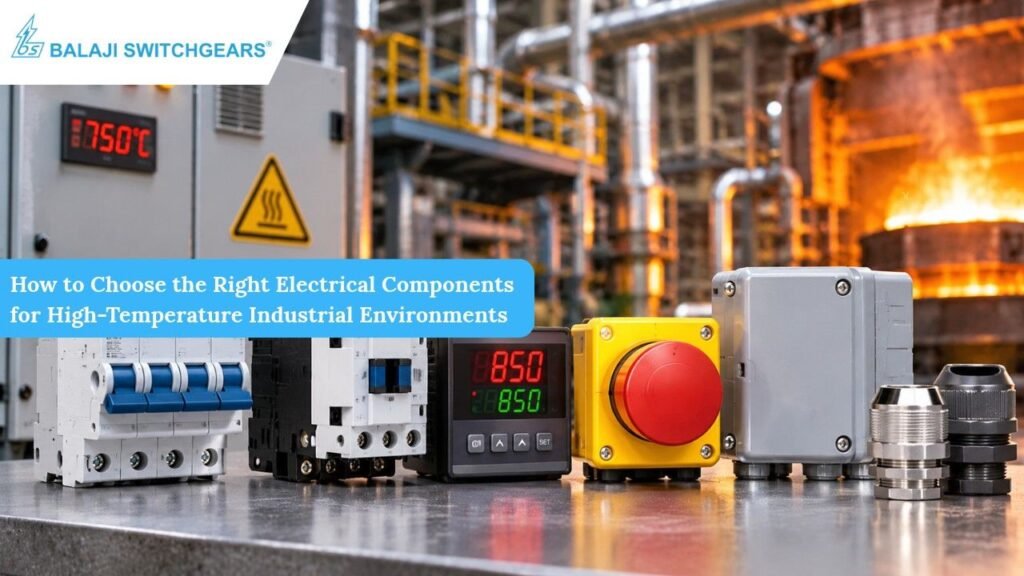
Industrial electrical systems are often expected to operate continuously under demanding conditions. In industries such as steel manufacturing, cement, pharmaceuticals, food processing, chemicals, foundries and power generation, electrical components may be exposed to high ambient temperatures, heat from nearby machinery, hot process areas and limited ventilation.
These conditions can affect the performance of circuit breakers, contactors, cables, sensors, control panels and automation equipment. A component that performs reliably under normal operating conditions may experience premature wear, unexpected tripping or insulation deterioration when exposed to excessive heat.
At Balaji Switchgears, we understand that selecting electrical components for such environments requires more than checking their current and voltage ratings. Temperature compatibility, installation conditions, derating requirements and thermal management must all be considered to build a reliable electrical system.
Let’s understand the important factors that help in selecting the right electrical components for high-temperature industrial applications.
1. Understand the Actual Operating Temperature
The first step is to identify the temperature conditions in which the electrical components will operate. Many industrial facilities have areas where temperatures are considerably higher than standard working environments.
For example, electrical equipment installed near industrial ovens, furnaces, boilers, compressors and production machinery may experience continuous heat exposure. In some applications, the temperature inside an electrical enclosure can become higher than the surrounding room temperature because of heat generated by the installed components themselves.
It is important to distinguish between three temperature conditions:
- Ambient temperature: The temperature of the surrounding environment where the equipment is installed.
- Internal enclosure temperature: The temperature inside the electrical panel, which can increase due to heat generated by breakers, drives, power supplies and other devices.
- Component operating temperature: The temperature experienced by an individual component during operation.
These temperatures are not necessarily the same. A panel installed in a moderately warm room may still experience excessive internal heat if it contains multiple power-consuming devices with insufficient ventilation.
Before selecting components, assess the maximum expected temperature, normal operating temperature and possible temperature fluctuations. This helps identify the actual requirements instead of relying on general assumptions.
2. Check the Temperature Rating of Every Component
Every electrical component has specified operating conditions. These details are available in the manufacturer’s datasheet and technical documentation.
However, one common mistake is assuming that all components inside an electrical panel can operate at the same temperature. Different devices have different thermal limits.
For example, a circuit breaker, contactor, PLC, power supply and industrial sensor may have different permissible operating temperature ranges. Selecting one high-temperature-rated component does not automatically make the complete electrical system suitable for high-temperature operation.
While reviewing component specifications, check:
- Permissible ambient operating temperature
- Maximum operating temperature
- Rated current at the specified temperature
- Storage temperature limits
- Permissible temperature rise
- Required ventilation or cooling conditions
It is also important to understand whether the manufacturer’s stated temperature refers to ambient conditions, the device surface or another measurement point.
For critical applications, component selection should always be based on the manufacturer’s specified operating conditions and installation instructions.
3. Select Circuit Breakers with Proper Derating
Circuit breakers are among the most important components in an industrial electrical distribution system. Their primary function is to protect electrical circuits against overloads and short circuits.
However, high ambient temperatures can influence their operating characteristics, particularly in thermal-magnetic circuit breakers.
When the surrounding temperature increases, the thermal element may respond differently. This can reduce the current level at which the breaker trips and may lead to unwanted interruptions if the equipment is not selected correctly.
This is why circuit breaker derating becomes important.
Derating means adjusting the usable current capacity of a device according to the operating conditions. A breaker rated for a particular current under specified reference conditions may not be suitable for carrying the same current continuously at a higher temperature.
For example, Schneider Electric’s technical guidance for certain PowerPact circuit breaker ranges specifies that operation above 40°C inside the enclosure requires consideration of derating. The actual correction depends on the breaker model and trip unit.
When selecting circuit breakers for high-temperature environments, consider:
- Rated operational current
- Ambient temperature inside the enclosure
- Manufacturer-provided derating tables
- Trip unit characteristics
- Short-circuit breaking capacity
- Coordination with cables and downstream protection devices
Never increase the breaker rating simply to avoid nuisance tripping. The selected device must continue to provide the required protection to the connected cables and equipment.
4. Choose Cables with Suitable Insulation Materials
Cables are another critical part of electrical installations exposed to high temperatures. Their insulation and outer sheath protect conductors against electrical leakage, mechanical damage and environmental conditions.
However, conventional cable insulation may deteriorate when exposed to temperatures beyond its intended operating range.
For example, standard PVC-insulated cables are commonly used in general industrial installations, but applications involving furnaces, ovens, foundries and high-temperature machinery may require specialised cable constructions.
Depending on the application, suitable insulation materials can include:
- Silicone: Offers flexibility and suitability for many elevated-temperature applications.
- PTFE: Used in specialised applications requiring high thermal and chemical resistance.
- FEP: Provides thermal and chemical resistance for suitable industrial applications.
- Glass fibre: Used in certain high-temperature wiring applications.
- Cross-linked materials: Can offer improved thermal performance compared with some conventional insulation materials.
LAPP’s ÖLFLEX® HEAT cable range includes temperature-resistant cables and single conductors designed for elevated-temperature applications. Depending on the cable construction, these products are available with materials such as silicone, FEP, PTFE and glass fibre.
While selecting cables, do not focus only on the maximum temperature rating. Also evaluate conductor size, current-carrying capacity, installation method, cable bundling, chemical exposure, mechanical stress and flexibility requirements.
A cable suitable for high ambient temperature may still require current-carrying capacity adjustments depending on how it is installed.
5. Pay Attention to Contactors and Relays
Contactors and relays are widely used in industrial control panels for switching motors, heaters, pumps, compressors and other electrical loads.
In high-temperature environments, excessive heat can affect their operating performance and service life. It can influence coil operation, insulation materials and the temperature of electrical connections.
When selecting contactors and relays, consider the following:
- Rated operational current for the intended load
- Coil voltage and operating conditions
- Permissible ambient temperature
- Switching frequency
- Electrical and mechanical endurance
- Required spacing and ventilation
- Manufacturer-specific derating requirements
For motor applications, the contactor must be selected according to the motor’s operating category and actual load conditions. A device suitable for a resistive load may not be appropriate for frequent motor switching.
Additionally, avoid installing heat-sensitive control devices too close to components that generate significant heat, such as drives, transformers and power supplies.
Proper component spacing and panel layout can help reduce unnecessary thermal stress.
6. Consider Temperature Ratings for Automation Equipment
Modern industrial facilities depend on automation systems to monitor processes, control machinery and maintain production efficiency.
PLCs, HMIs, industrial power supplies, communication modules and sensors are often installed inside electrical enclosures. These electronic devices can be particularly sensitive to excessive operating temperatures.
High temperatures may cause unstable operation, communication interruptions, reduced component life or unexpected equipment shutdowns.
For automation equipment, check:
- Operating temperature range
- Heat dissipation requirements
- Mounting orientation
- Required clearance around the device
- Permissible humidity and environmental conditions
- Manufacturer-recommended ventilation
Industrial sensors also need careful consideration. Sensors installed near hot machinery or process lines must be selected according to their actual environmental exposure.
For example, a sensor used for detecting objects near a heated production line may require a different temperature specification from one installed in a normal indoor assembly area.
The sensing technology, housing material, cable connection and mounting arrangement should all be evaluated before finalising the device.
7. Do Not Ignore Enclosure Thermal Management
Even when individual electrical components have suitable temperature ratings, poor enclosure design can create overheating problems.
An electrical panel contains several devices that generate heat during operation. Circuit breakers, variable frequency drives, transformers, power supplies and contactors all contribute to the overall thermal load.
If this heat cannot escape effectively, the internal temperature of the enclosure may increase beyond the recommended operating conditions of the installed equipment.
A proper thermal management strategy should consider:
Panel layout: Arrange components to maintain suitable spacing and avoid concentrating heat-generating devices in one area.
Ventilation: Use suitable ventilation arrangements where the environmental conditions permit them. Filters and ventilation openings must be considered in relation to dust and moisture exposure.
Cooling systems: Where natural heat dissipation is insufficient, consider suitable panel fans, heat exchangers or industrial air-conditioning systems.
Enclosure selection: Evaluate enclosure size, material, mounting location, ingress protection requirements and heat dissipation characteristics.
Solar heat gain: Panels installed outdoors or exposed to direct sunlight may experience additional heating even when the surrounding air temperature appears acceptable.
Enclosure thermal management is not simply about installing a fan. The cooling arrangement must be suitable for the surrounding environment and the enclosure’s protection requirements.
8. Consider Environmental Conditions Along with Temperature
High temperature is often accompanied by other challenging environmental conditions. Industrial equipment may also be exposed to dust, moisture, oil, chemicals, vibration and corrosive substances.
Selecting components based only on their temperature rating can therefore leave other important risks unaddressed.
For example, a cable installed near a hot chemical processing line may require both temperature-resistant insulation and chemical resistance. Similarly, a control panel installed in a dusty production area may require an enclosure with an appropriate ingress protection rating.
Before finalising components, evaluate:
- Dust and moisture exposure
- Chemical and oil contact
- Vibration and mechanical stress
- Outdoor installation and UV exposure
- Corrosion risks
- Required IP protection
- Maintenance and accessibility requirements
The objective is to select components that can withstand the complete operating environment, not just one environmental condition.
9. Common Mistakes to Avoid
Even a well-designed electrical system can experience problems if component selection and installation are not handled carefully.
Some common mistakes include:
Ignoring derating requirements: Using the rated current without checking temperature-related correction factors can affect protection and reliability.
Using standard cables everywhere: Conventional cable insulation may not be suitable for applications involving continuous high-temperature exposure.
Overlooking internal panel temperature: The temperature inside an enclosure can rise because of heat generated by installed equipment.
Installing components too close together: Insufficient spacing can restrict heat dissipation and increase local temperatures.
Ignoring manufacturer datasheets: Assuming that similar-looking components have identical temperature ratings can lead to incorrect selection.
Choosing cooling equipment without assessment: An unsuitable fan or cooling arrangement may fail to control the internal temperature or compromise enclosure protection.
Avoiding these mistakes during the design and selection stage can reduce the risk of overheating, unnecessary downtime and premature component replacement.
How Balaji Helps
At Balaji Switchgears, we understand that industrial electrical components must be selected according to the actual operating conditions of each application. Our approach focuses on helping OEMs, panel builders, system integrators and industrial customers identify suitable electrical and automation solutions.
From circuit protection and controlgear to industrial cables, sensors, panel accessories and enclosure-related solutions, we help customers explore component options based on their application requirements.
For high-temperature installations, we believe that checking operating conditions, reviewing technical specifications and considering derating and thermal management are essential steps before finalising any component.
Choose Right. Operate Reliably.
Connect with Balaji Switchgears for electrical component selection assistance for your industrial applications.