
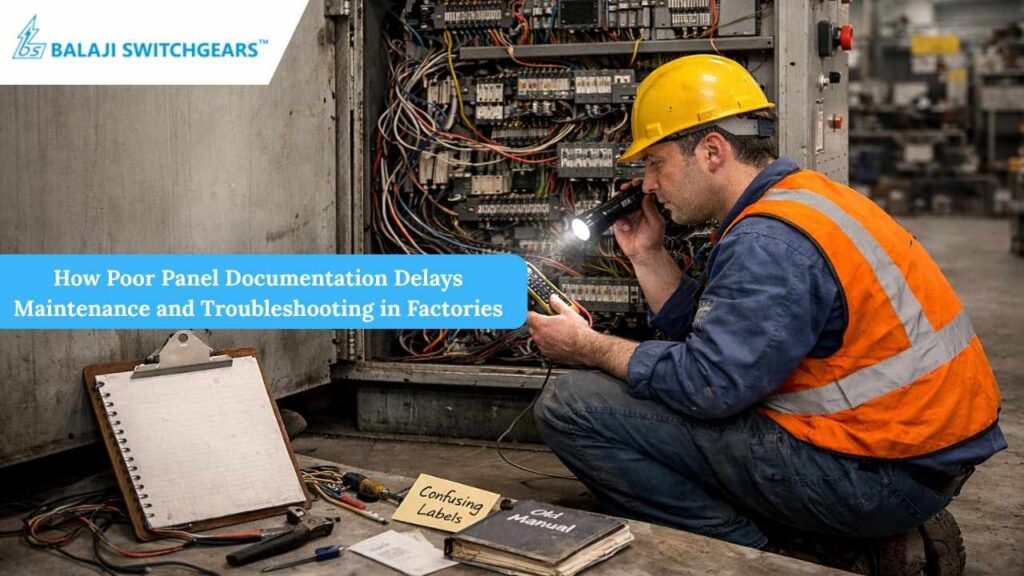
In industrial environments, efficiency is not just about advanced machinery or automation, it is about how well every part of the system is understood and managed. Electrical panels play a central role in controlling operations, distributing power, and ensuring that machines run smoothly. Yet, one critical element that often gets ignored is panel documentation.
While panels may be designed with precision and built using high-quality components, poor documentation can quietly become a major obstacle. When faults occur and they inevitably do, the absence of clear, accurate documentation can turn a simple issue into a time-consuming challenge. Maintenance teams are forced to rely on guesswork, troubleshooting becomes slower, and production suffers.
Understanding how poor panel documentation affects maintenance and troubleshooting is essential for any factory aiming to improve reliability and reduce downtime.
The Role of Panel Documentation in Industrial Systems
Panel documentation is more than just a set of drawings or technical files. It is the complete reference framework that explains how an electrical panel is structured and how it operates. From wiring diagrams to component layouts, it provides a clear picture of the system’s design and functionality.
In a well-documented panel, every connection, component, and circuit is clearly defined. This allows technicians to quickly understand how signals flow, how power is distributed, and how different elements interact with each other.
In contrast, when documentation is missing, outdated, or unclear, even a well-built system becomes difficult to manage. The lack of clarity creates confusion, especially during fault conditions when quick decisions are required.
When Documentation Fails, Maintenance Slows Down
Maintenance in industrial settings is often time-sensitive. A machine breakdown can disrupt entire production lines, and delays in resolving the issue directly impact output and costs.
When panel documentation is poor, the first challenge technicians face is simply understanding the system. Without clear wiring diagrams or component identification, they are forced to trace circuits manually. This process is not only slow but also increases the chances of error.
Instead of focusing on solving the problem, valuable time is spent trying to interpret how the system was originally designed. In high-pressure situations, this delay can significantly extend downtime.
The Hidden Challenge of Troubleshooting Without Clarity
Troubleshooting is a structured process when proper documentation is available. Engineers can follow logical steps, isolate faults, and resolve issues efficiently. However, without documentation, this process becomes uncertain and inconsistent.
Imagine a scenario where a machine stops intermittently. Without a proper schematic, the technician cannot easily determine which circuit controls that function. The fault could lie in a relay, a sensor, or a wiring issue but identifying the exact source becomes difficult.
This uncertainty leads to trial-and-error troubleshooting. Components may be checked or replaced unnecessarily, and the actual issue may remain unresolved for longer than expected.
Over time, such inefficiencies not only delay repairs but also increase frustration among maintenance teams.
Impact on Production and Operational Efficiency
The effects of poor panel documentation are not limited to maintenance teams they ripple across the entire factory.
Production schedules are tightly planned, and any delay in restoring equipment affects output. When troubleshooting takes longer, machines remain idle, leading to missed deadlines and reduced productivity.
Additionally, repeated issues caused by unresolved faults can create a cycle of downtime. Without proper documentation, the root cause may never be fully addressed, resulting in recurring problems.
Operational efficiency depends on quick response times, and documentation plays a key role in achieving that speed.
Increased Risk of Human Error
In the absence of proper documentation, technicians often rely on assumptions or past experience. While experience is valuable, it cannot replace accurate technical information.
This increases the risk of human error. A wire may be connected incorrectly, a component may be misidentified, or a setting may be adjusted improperly. Such mistakes can lead to further complications, including equipment damage or safety hazards.
Clear documentation acts as a guide that minimizes these risks. It ensures that every action taken during maintenance is based on accurate information rather than guesswork.
Challenges in Training and Knowledge Transfer
Factories operate with teams that evolve over time. New technicians join, experienced staff move on, and responsibilities shift. In such environments, documentation becomes a critical tool for knowledge transfer.
When documentation is lacking, new team members struggle to understand existing systems. They become dependent on senior staff, which creates bottlenecks in operations.
On the other hand, well-documented panels allow new technicians to quickly get up to speed. They can study the system, understand its design, and contribute effectively to maintenance and troubleshooting.
This reduces dependency on individuals and builds a more resilient workforce.
The Problem with Outdated Documentation
Even when documentation exists, it must be kept updated. Industrial systems often undergo modifications—components are replaced, circuits are upgraded, and configurations are changed.
If these changes are not reflected in the documentation, it becomes misleading. Technicians may follow outdated diagrams that no longer represent the actual system.
This creates confusion and can lead to incorrect troubleshooting steps. In many cases, outdated documentation can be more problematic than having no documentation at all because it gives a false sense of accuracy.
Maintaining up-to-date records is therefore just as important as creating them.
Long-Term Cost Implications
Poor documentation may seem like a minor issue initially, but its long-term impact on costs can be significant.
Extended downtime leads to production losses. Increased troubleshooting time raises labor costs. Incorrect repairs or repeated failures can damage equipment, leading to expensive replacements.
Over time, these hidden costs accumulate and affect overall profitability.
Investing in proper panel documentation is a small effort compared to the financial impact of inefficient maintenance and prolonged downtime.
Building a Documentation-Driven Approach
Improving panel documentation is not just about creating diagrams, it requires a structured approach.
Clear and accurate schematics should be prepared during the design phase itself. Every component must be properly labeled, and wiring details should be easy to understand. Documentation should be standardized so that it is consistent across different panels and projects.
Equally important is the practice of updating documentation after every modification. This ensures that the information always reflects the actual system.
Digital documentation is also becoming increasingly valuable. It allows easy access, quick updates, and seamless sharing among teams. In large industrial setups, this accessibility can make a significant difference in response time.
How Good Documentation Transforms Maintenance
When panel documentation is done correctly, the difference in maintenance efficiency is immediately visible.
Technicians can approach faults with clarity and confidence. They know where to look, what to check, and how to proceed. Troubleshooting becomes faster, more accurate, and less stressful.
Instead of spending time understanding the system, they can focus directly on resolving the issue. This leads to shorter downtime, better productivity, and improved system reliability.
In the long run, good documentation creates a more organized and efficient maintenance environment.
The Balaji Switchgears Perspective
In today’s industrial landscape, reliability is not just about using quality components, it is about building systems that are easy to maintain and troubleshoot.
This is where the importance of structured panel documentation becomes evident.
At Balaji Switchgears, the focus extends beyond supplying electrical solutions. It includes ensuring that systems are designed with clarity, precision, and long-term usability in mind. Proper documentation is treated as an integral part of the solution, not an afterthought.
By emphasizing accurate design practices and clear documentation, industries can achieve faster maintenance cycles, reduced downtime, and improved operational efficiency.
Conclusion
Electrical panels are the heart of industrial operations, but their true effectiveness depends on how well they are understood and managed. Poor panel documentation creates unnecessary complexity, delays maintenance, and makes troubleshooting a difficult task. In contrast, clear and updated documentation simplifies operations, reduces errors, and ensures that systems can be maintained efficiently.
For factories aiming to improve productivity and reliability, focusing on documentation is a practical and impactful step. It not only supports maintenance teams but also strengthens the overall performance of the system. In an environment where every minute of downtime matters, proper documentation is not just helpful it is essential.