
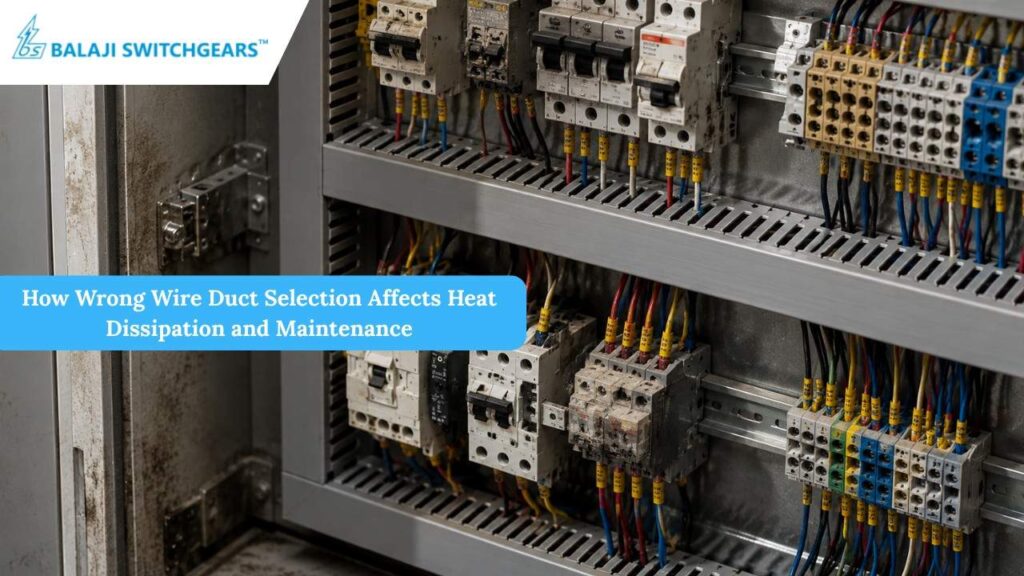
In every electrical control panel, there are components that instantly grab attention: circuit breakers, PLCs, relays, drives, and terminal blocks. However, one component that often goes unnoticed but plays a critical role in ensuring the reliability, safety, and efficiency of the entire system is the wire duct.
Wire ducts are designed to organize, route, and protect electrical wiring inside control panels. While they may appear to be simple plastic channels, choosing the wrong wire duct can have a significant impact on heat dissipation, cable performance, maintenance efficiency, and the overall lifespan of electrical systems.
Many industries invest heavily in premium electrical components but overlook the importance of selecting the right wire duct. This small oversight can result in excessive heat buildup, difficult maintenance, cable damage, increased downtime, and higher operational costs.
In this blog, we will explore how incorrect wire duct selection affects electrical systems, why heat management matters, and why Trinity Touch wire ducts are becoming the preferred choice for modern industrial applications.
Why Wire Duct Selection Matters
A wire duct is much more than a cable organizer. It serves multiple important functions inside an electrical enclosure:
- Organizes electrical wiring neatly
- Separates power and control cables
- Protects wires from mechanical damage
- Improves airflow inside panels
- Simplifies installation and future maintenance
- Supports safe and reliable cable routing
Selecting a wire duct solely based on size or price often leads to performance issues that become evident only after the panel is commissioned.
The Hidden Problem: Heat Buildup Inside Control Panels
Every electrical component generates heat during operation. Contactors, VFDs, power supplies, transformers, relays, and cables continuously release thermal energy inside an enclosure.
If this heat is not managed properly, it begins to accumulate.
The result is:
- Higher operating temperatures
- Reduced equipment efficiency
- Faster insulation ageing
- Increased risk of component failure
- Unexpected shutdowns
One overlooked contributor to this problem is the wire duct itself.
Improper wire duct selection can obstruct airflow, create cable congestion, and trap heat in confined areas.
How Wrong Wire Duct Selection Affects Heat Dissipation
1. Overfilled Wire Ducts Restrict Airflow
One of the most common installation mistakes is filling the wire duct beyond its recommended capacity.
When cables are tightly packed:
- Air circulation reduces significantly.
- Heat generated by the cables cannot escape efficiently.
- Cable temperatures continue to rise during operation.
Continuous exposure to elevated temperatures gradually reduces insulation life and affects cable reliability.
Selecting the correct wire duct size ensures sufficient space for both cable routing and ventilation.
2. Poor Ventilation Design
Modern slotted wire ducts are specifically designed to improve airflow around cables.
If installers choose:
- Non-slotted ducts where ventilation is required
- Incorrect slot spacing
- Inferior duct designs
Heat gets trapped inside the wiring channels.
Efficient ventilation is particularly important in densely populated control panels where multiple power cables operate simultaneously.
3. Inferior Material Quality
Not all wire ducts are manufactured using the same material quality.
Low-grade plastic can:
- Warp under high temperatures
- Become brittle over time
- Lose structural strength
- Crack during maintenance
High-quality wire ducts manufactured using premium engineering plastics maintain their structural integrity even in demanding industrial environments.
This directly contributes to improved heat resistance and longer service life.
4. Incorrect Cable Segregation
Power cables naturally generate more heat than signal or communication cables.
When all cable types are routed through the same wire duct without proper segregation:
- Heat transfers to sensitive control cables.
- Signal interference may increase.
- Maintenance becomes more difficult.
Proper wire duct planning allows technicians to separate different cable categories while maintaining organized routing.
Maintenance Problems Caused by Wrong Wire Duct Selection
Heat is only one part of the problem.
Poor wire duct selection also creates long-term maintenance challenges.
Difficult Cable Identification
When wire ducts are overcrowded, technicians struggle to trace individual wires.
This increases maintenance time and raises the possibility of incorrect cable handling during troubleshooting.
Increased Risk of Wire Damage
Forcing cables into undersized ducts places unnecessary stress on insulation.
Repeated maintenance activities can cause:
- Scratches
- Insulation cuts
- Bent conductors
- Premature cable failure
A properly sized wire duct minimizes mechanical stress on wiring.
Longer Downtime
Maintenance teams often work under strict production schedules.
If cable routing is disorganized:
- Fault identification becomes slower.
- Component replacement takes longer.
- Production losses increase due to extended downtime.
Well-organized wire ducts significantly improve maintenance efficiency.
Reduced Flexibility for Future Expansion
Industrial control panels frequently require future modifications.
Additional sensors, drives, communication modules, or automation upgrades often require extra wiring.
An undersized wire duct leaves no room for expansion.
Technicians are then forced to install additional ducts or reroute existing wiring, increasing labor costs and project complexity.
The Impact on Cable Life
Electrical cable insulation gradually deteriorates under excessive heat.
Higher operating temperatures accelerate insulation ageing, reducing the expected service life of the cable.
Consequences include:
- Reduced dielectric strength
- Cracked insulation
- Higher leakage current
- Increased failure rates
Selecting the correct wire duct indirectly protects cable insulation by allowing better heat dissipation.
Why Trinity Touch Wire Ducts Make a Difference
When reliability, durability, and ease of installation are priorities, Trinity Touch wire ducts provide an excellent solution for industrial control panels.
They are designed to meet the demands of modern electrical installations where organized wiring and effective heat management are essential.
Some key advantages include:
Superior Material Quality
Trinity Touch wire ducts are manufactured using high-quality PVC materials that offer:
- Excellent dimensional stability
- Long service life
- High mechanical strength
- Better resistance to deformation
Efficient Cable Organization
Their precisely designed slots allow:
- Easy cable entry and exit
- Better routing flexibility
- Cleaner panel layouts
- Faster installation
Organized wiring also supports better airflow throughout the enclosure.
Enhanced Maintenance
Neatly arranged cables simplify:
- Cable tracing
- Inspection
- Repairs
- Future modifications
Maintenance engineers spend less time locating cables and more time resolving actual issues.
Professional Panel Appearance
A well-organized panel reflects quality engineering.
Proper cable management improves not only functionality but also the overall appearance of electrical panels.
This is especially important for OEMs, panel builders, and automation system integrators.
Reliable Industrial Performance
Trinity Touch wire ducts are suitable for various industrial applications including:
- Manufacturing plants
- Process industries
- Power distribution panels
- Building automation
- Machine control systems
- OEM equipment
- Infrastructure projects
Their robust construction ensures dependable performance even under demanding operating conditions.
Best Practices for Selecting the Right Wire Duct
Choosing the right wire duct involves more than matching cable size.
Consider the following factors:
- Estimate future cable additions before selecting duct size.
- Avoid filling wire ducts beyond recommended capacity.
- Separate power and control wiring wherever possible.
- Select high-quality materials designed for industrial environments.
- Ensure sufficient ventilation for heat-generating cables.
- Maintain neat cable routing using proper accessories.
- Choose products from trusted manufacturers with proven quality standards.
These simple practices can significantly improve panel reliability and reduce long-term maintenance costs.
Small Component, Big Impact
Wire ducts may seem like a minor component in an electrical panel, but their influence extends far beyond cable organization.
The wrong wire duct can contribute to excessive heat buildup, poor airflow, difficult maintenance, insulation damage, and higher operational costs.
On the other hand, selecting the right solution improves thermal management, simplifies servicing, supports future expansion, and enhances the overall reliability of the electrical system.
Investing in quality wire ducts today helps prevent expensive failures tomorrow.
Why Choose Balaji Switchgears?
Choosing the right products is only part of building a dependable electrical system. Partnering with an experienced supplier ensures you receive genuine products and the right technical guidance for your application.
Balaji Switchgears is a trusted supplier of Trinity Touch electrical solutions, offering genuine products backed by knowledgeable application support. Whether you are designing a new control panel, upgrading an existing installation, or looking for reliable cable management solutions, we can help you select the right Trinity Touch wire ducts based on your project requirements.
With a strong focus on product quality, customer satisfaction, and technical expertise, Balaji Switchgears supports panel builders, OEMs, contractors, and industries with dependable electrical solutions that improve safety, organization, and long-term system performance.