
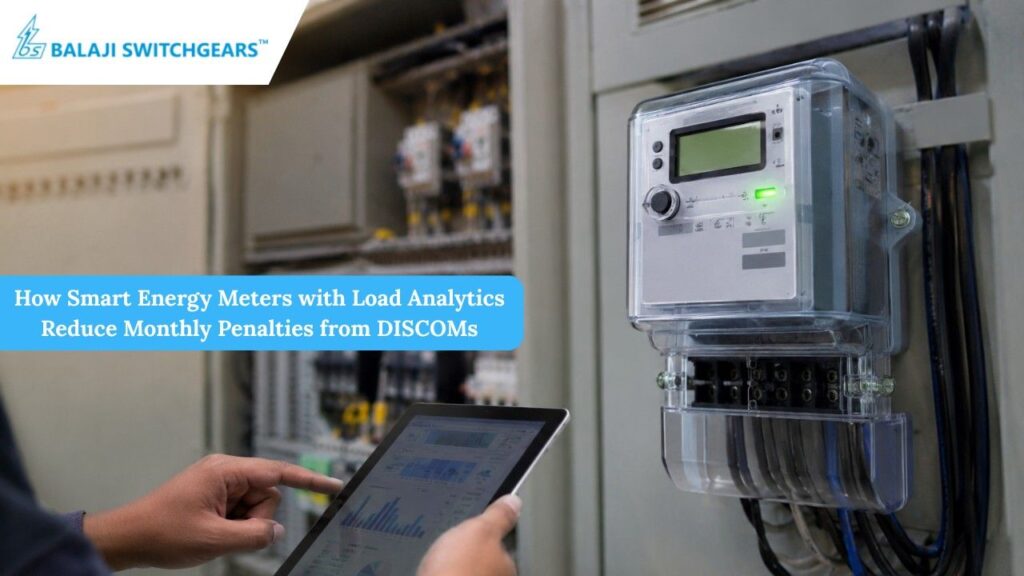
In today’s industrial and commercial environment, electricity management is no longer limited to simply paying monthly power bills. Industries are now under constant pressure to optimize energy usage, reduce operational costs, and maintain compliance with DISCOM regulations. One of the biggest challenges faced by factories, commercial buildings, and large facilities is avoiding monthly penalties imposed by electricity distribution companies due to poor energy management practices.
These penalties can arise from several issues such as exceeding sanctioned load limits, poor power factor, peak demand violations, unbalanced load distribution, and inefficient energy consumption patterns. Many industries unknowingly lose significant amounts of money every month because they lack proper visibility into their electrical usage.
This is where smart energy meters with load analytics are transforming industrial power management in 2026.
Modern businesses are increasingly adopting advanced energy monitoring systems to track real-time electricity consumption, analyze load behavior, and identify inefficiencies before they become costly problems. Smart energy meters combined with load analytics provide industries with accurate insights that help reduce energy wastage, improve operational efficiency, and most importantly, minimize penalties from DISCOMs.
Understanding Smart Energy Meters
Smart energy meters are advanced digital devices designed to monitor and record electricity consumption in real time.
Unlike conventional meters that only measure total power usage, smart meters provide detailed electrical data including:
- Voltage levels
- Current consumption
- Power factor
- Frequency
- Peak demand
- Energy consumption patterns
- Load distribution
- Harmonic distortions
- Real-time power monitoring
These meters continuously collect and transmit electrical data, allowing industries to monitor their systems more accurately and efficiently.
Smart energy meters play a major role in modern energy monitoring systems because they help industries gain complete visibility into electrical performance.
What Is Load Analytics?
Load analytics refers to the process of analyzing electrical load behavior using real-time and historical energy data.
It helps industries understand how electricity is consumed across different equipment, departments, and operational periods.
Load analytics identifies patterns such as:
- Peak load timings
- Overloaded circuits
- Sudden power spikes
- Underutilized equipment
- Demand fluctuations
- Power factor issues
- Energy wastage zones
By studying this data, industries can make informed decisions to optimize power usage and avoid unnecessary penalties.
When integrated with smart energy meters, load analytics becomes a powerful tool for energy management and cost reduction.
Why DISCOM Penalties Are Increasing in 2026
Electricity demand is growing rapidly due to industrial expansion, automation, electric mobility, and infrastructure growth.
To maintain grid stability and efficient power distribution, DISCOMs have implemented stricter energy regulations and penalty structures.
Industries now face penalties for:
- Exceeding sanctioned demand
- Poor power factor
- Reactive power consumption
- Peak load violations
- Harmonic distortions
- Unbalanced electrical loads
- Excessive energy wastage
Without proper energy monitoring systems, many businesses fail to identify these issues until they receive high electricity bills with additional penalty charges.
This is why industries are shifting toward smart energy meters and load analytics solutions.
Reducing Maximum Demand Penalties
Maximum demand charges are one of the most common penalties imposed by DISCOMs.
Industries are assigned a sanctioned load capacity, and exceeding this limit during peak usage periods results in heavy penalties.
Smart energy meters continuously monitor demand levels in real time. Load analytics helps industries identify which equipment or operations are causing demand spikes.
This allows facility managers to:
- Shift non-critical loads
- Optimize equipment scheduling
- Prevent simultaneous heavy load operations
- Control peak demand usage
By managing electrical demand efficiently, industries can avoid exceeding sanctioned limits and reduce monthly penalties significantly.
Improving Power Factor to Avoid Penalties
Poor power factor is another major reason for DISCOM penalties.
A low power factor indicates inefficient electrical usage and increases the burden on the power distribution network.
Traditional systems often fail to detect gradual power factor deterioration.
Smart energy meters continuously monitor power factor levels and provide alerts when they fall below acceptable limits.
Load analytics helps identify the root causes of poor power factor such as:
- Inductive loads
- Overloaded motors
- Improper capacitor bank operation
- Reactive power imbalance
Industries can then take corrective actions quickly to maintain a healthy power factor and avoid penalty charges.
Real-Time Energy Monitoring for Better Control
One of the biggest advantages of smart energy meters is real-time visibility.
Conventional energy management methods rely heavily on monthly bills, which only provide delayed information.
Smart energy meters offer live monitoring of electrical parameters, allowing industries to respond immediately to abnormal conditions.
Real-time energy monitoring helps businesses:
- Detect unusual power consumption
- Prevent overload conditions
- Optimize energy usage
- Identify inefficient equipment
- Monitor operational performance
This proactive approach improves energy efficiency and reduces unnecessary electricity expenses.
Identifying Hidden Energy Losses
Many industries lose energy due to hidden inefficiencies that remain unnoticed for long periods.
These include:
- Idle machinery consumption
- Voltage imbalances
- Leakage currents
- Harmonic distortions
- Poor load distribution
- Overheating electrical components
Load analytics identifies these hidden problems through detailed consumption analysis.
By correcting these inefficiencies, industries can lower overall power consumption and reduce operational costs.
Improved energy efficiency also helps avoid penalties linked to excessive power wastage.
Better Load Distribution Across Operations
Uneven load distribution can create serious electrical issues and increase energy losses.
Some sections of a facility may become overloaded while others remain underutilized.
Smart energy meters with load analytics provide detailed insights into load patterns across different departments and machinery.
This helps industries balance electrical loads more effectively and improve system stability.
Balanced load distribution reduces stress on equipment, improves operational reliability, and minimizes the chances of penalty-triggering conditions.
Supporting Energy Audits and Compliance
Regulatory compliance is becoming increasingly important in industrial power management.
Industries are often required to maintain records of energy usage, power quality, and operational efficiency.
Smart energy meters automatically record detailed electrical data that can be used during:
- Energy audits
- Regulatory inspections
- Compliance reporting
- Internal performance reviews
This documentation helps industries demonstrate compliance with DISCOM standards and avoid regulatory issues.
Predictive Insights Through Data Analytics
Modern energy monitoring systems do more than simply display power consumption.
Advanced load analytics uses historical and real-time data to predict future energy behavior.
This predictive capability helps industries:
- Forecast peak demand
- Plan energy usage schedules
- Identify seasonal load trends
- Prevent future overload conditions
- Optimize operational planning
Predictive energy management reduces the risk of sudden demand spikes and unexpected penalties.
Improving Equipment Performance
Electrical inefficiencies often affect equipment performance and lifespan.
Frequent voltage fluctuations, overloads, and poor power quality can damage motors, drives, compressors, and automation systems.
Smart energy meters continuously monitor electrical conditions and help identify abnormal operating patterns.
Load analytics enables maintenance teams to detect problems early and take corrective actions before equipment failures occur.
This improves equipment reliability and reduces maintenance costs.
Integration with Smart Factory Systems
In 2026, industries are rapidly adopting smart factory technologies and digital automation systems.
Smart energy meters integrate easily with:
- Building management systems
- SCADA systems
- Industrial automation platforms
- IoT-based monitoring systems
- Cloud-based analytics platforms
This integration enables centralized energy management and better operational control.
As industries continue moving toward Industry 4.0, energy monitoring systems are becoming a critical part of digital infrastructure.
Cost Savings Beyond Penalty Reduction
While avoiding DISCOM penalties is a major advantage, smart energy meters provide additional financial benefits.
Industries can reduce costs through:
- Improved energy efficiency
- Lower equipment maintenance expenses
- Reduced downtime
- Better operational planning
- Optimized energy consumption
- Reduced power wastage
Over time, these savings contribute to significant improvements in operational profitability.
Why Industries Are Investing in Energy Monitoring Systems
Energy costs are increasing steadily, and industries are under pressure to improve sustainability and operational efficiency.
Smart energy meters with load analytics provide businesses with complete control over energy consumption.
Industries today need accurate data, predictive insights, and real-time monitoring to remain competitive.
This is why modern energy monitoring systems are becoming essential across manufacturing plants, commercial buildings, infrastructure projects, hospitals, data centers, and industrial facilities.
The Role of Professional Energy Solution Providers
Implementing an effective energy monitoring system requires proper system design, accurate meter selection, and expert integration.
Industries prefer experienced electrical solution providers who understand industrial load behavior and energy optimization strategies.
Trusted companies like Balaji Switchgears help industries deploy advanced smart energy meters and load analytics solutions tailored to their operational requirements.
With expertise in industrial electrical systems and power management technologies, Balaji Switchgears supports businesses in improving energy efficiency, reducing operational risks, and minimizing DISCOM penalties.
As industries continue adopting smart energy infrastructure, companies are increasingly relying on Balaji Switchgears for reliable and future-ready energy monitoring systems.
From energy metering and load analysis to system optimization and maintenance support, Balaji Switchgears plays a key role in helping industries achieve smarter energy management.
Conclusion
In 2026, effective energy management is no longer optional for industries and commercial facilities. Rising electricity costs, stricter DISCOM regulations, and increasing operational demands require businesses to adopt smarter and more proactive energy solutions.
Smart energy meters with load analytics provide industries with real-time visibility, predictive insights, and accurate energy monitoring capabilities that help reduce monthly penalties and improve operational efficiency.
From controlling peak demand and improving power factor to identifying hidden energy losses and optimizing load distribution, these systems deliver significant operational and financial advantages.
As industries continue moving toward digital and energy-efficient operations, smart energy monitoring systems will become an essential part of modern electrical infrastructure.
Businesses looking to improve reliability, efficiency, and long-term cost savings are increasingly partnering with experienced companies like Balaji Switchgears to implement advanced energy management solutions that support sustainable industrial growth.