
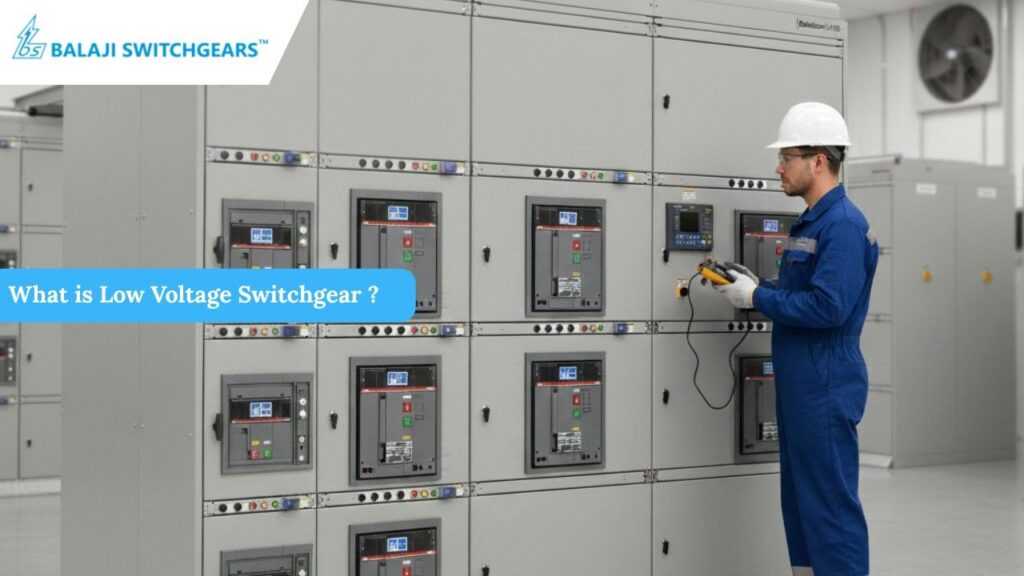
Low Voltage Switchgear is essential electrical equipment (up to 1000V AC/1500V DC) that controls, protects, and isolates electrical circuits, acting as the “traffic cop” for power in buildings, factories, and utilities, using components like circuit breakers, fuses, and switches to prevent damage and ensure safe, efficient power distribution. It features modular designs with compartmentalized sections for busbars, breakers (often draw-out types for easy servicing), and control wiring, offering reliability and safety through features like arc flash protection and selective coordination.
Primary Roles
- System Protection: It automatically cuts power during electrical faults (like short circuits or overloads) to safeguard equipment and prevent fire hazards.
- Operational Control: It allows operators to manually or automatically toggle power across different sections of a facility.
- Safe Isolation: It enables maintenance teams to disconnect specific circuits safely, ensuring repairs can happen without a total site blackout.
- Performance Monitoring: High-tech “smart” switchgear uses integrated sensors to track energy consumption and system health in real-time.
Essential Internal Components
- Circuit Breakers: Key mechanical devices (like ACBs or MCCBs) that detect and break abnormal currents.
- Busbars: Heavy-duty conductive strips (copper or aluminum) that serve as the “spine” for power distribution.
- Fuses: Sacrificial components that melt to break a circuit if the current becomes dangerously high.
- Relays: The “brains” that monitor electrical signals and trigger breakers during a fault.
- Enclosures: Protective steel cabinets that house the internal parts and protect personnel from high-voltage contact.
Common Configurations
- Fixed Type: Components are bolted in place. This is cost-effective and space-saving but often requires a total power shutdown for major maintenance.
- Withdrawable Type: Features breakers on rails that can be pulled out for service while the rest of the system remains energized.
- Compartmentalization: Metal-enclosed units house everything together, whereas metal-clad units use separate, grounded compartments for each component to maximize safety and reliability.
Where It’s Used
- Industrial Plants: Protecting large-scale motors and production lines in factories.
- Commercial Real Estate: Distributing power for HVAC, lighting, and elevators in malls or hospitals.
- Critical Infrastructure: Ensuring 24/7 uptime for data centers, airports, and power substations.
Read More: https://balajiswitchgears.com/low-voltage-switchgear-by-balajiswitchgears/