
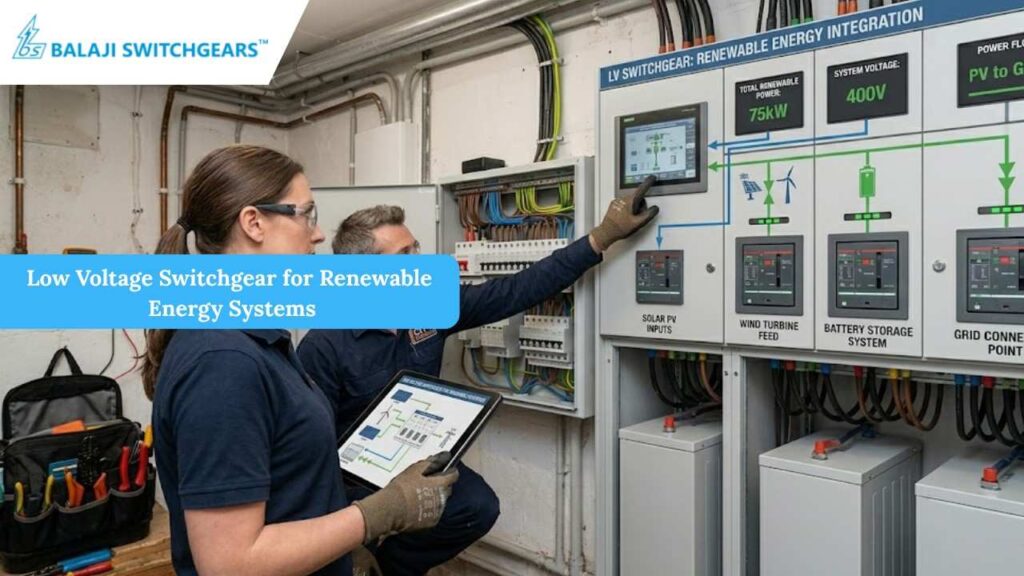
As the world accelerates toward clean energy adoption, the reliability and safety of renewable power systems have become more important than ever. Solar plants, wind farms and hybrid microgrids now deliver a significant share of global electricity, and each relies on robust electrical distribution equipment to operate efficiently. At the heart of safe and stable distribution lies low voltage switchgear — a critical component ensuring that renewable installations perform at peak capacity with minimal downtime.
This blog explores the role, features and importance of low voltage switchgear in renewable energy systems, along with key considerations for choosing the right equipment when designing or upgrading clean-energy infrastructure.
Why Renewable Energy Needs Advanced Switchgear
Traditional power networks were designed for predictable generation sources such as coal, gas and hydroelectric stations. Renewable energy, however, behaves differently — it is intermittent, decentralized and often influenced by environmental conditions like sunlight intensity or wind speed. This variability makes electrical protection and control far more complex.
Switchgear acts as the backbone of a renewable power system, allowing safe control, disconnection, protection and monitoring of circuits. Without dependable switchgear, any fault in a solar inverter, a cable, a battery bank or a wind turbine feeder could lead to partial or complete system shutdown.
This is why modern renewable energy systems rely heavily on Low voltage switchgear: it ensures smooth operation, protects equipment from faults and maximizes system uptime, even when generation fluctuates.
What Exactly Does Low Voltage Switchgear Do?
In renewable installations, switchgear performs several essential functions:
• Circuit protection: Prevents damage caused by overloads, short circuits or arc faults.
• System isolation: Allows operators to safely disconnect circuits during maintenance or emergencies.
• Load management: Manages distribution of power between different system components — solar inverters, batteries, EV chargers, auxiliary loads and more.
• Monitoring and diagnostics: Helps detect early trends in performance degradation, voltage imbalance or component fatigue.
• Integration with automation: In smart renewable systems, switchgear supports sensors, controllers and communication modules.
In small rooftop solar setups, switchgear may be relatively simple. In utility-scale solar parks, wind farms or hybrid microgrids, switchgear becomes more advanced and intelligently controlled.
Switchgear in Solar Power Systems
Solar installations — whether residential, commercial or utility-scale — require robust protection and control architecture. Some of the critical points where low voltage switchgear is used include:
Protection of solar inverters
Inverters convert DC power from solar panels into usable AC power. Because they are sensitive to voltage fluctuations, they must be protected from system faults.
Battery charging and discharging
Advanced switchgear coordinates battery behavior, especially in systems with lithium-ion or flow batteries. This ensures stable power flow and extended battery life.
AC distribution across loads
Commercial solar plants power offices, machinery, chargers and lighting circuits. Switchgear ensures each load receives stable voltage and safe power distribution.
Grid interconnection
When solar systems export power to the grid, protection relays and switchgear work together to maintain safety and compliance with utility regulations.
Switchgear in Wind Energy Systems
Wind turbines generate large surges of energy that fluctuate based on wind speed. Switchgear helps stabilize the output and protect downstream circuits.
Wind turbine output protection
Protection devices guard against overcurrent caused by sudden gusts or mechanical stresses on the turbine.
Step-down transformer and distribution interface
If the turbine feeds a low-voltage distribution network, switchgear ensures transition from medium-voltage systems to low-voltage circuits happens safely.
Remote control and communication
Wind farms often span large distances, so switchgear integrates with remote monitoring tools for smooth operation.
Switchgear in Hybrid and Microgrid Systems
Hybrid systems combine solar, wind, diesel generators and battery storage. Microgrids must constantly balance multiple sources and loads depending on demand and environmental factors.
Switchgear plays key roles here:
Source balancing
Allows safe switching between renewable generation, storage and diesel backup.
Synchronization and load sharing
Advanced protection and automation ensure smooth transitions between sources.
Islanding capability
In case of grid failure, microgrids can isolate themselves and continue operating independently — a function enabled through intelligent switchgear.
Energy efficiency monitoring
Smart metering and monitoring built into modern switchgear help microgrids optimize power usage and reduce waste.
Key Features Needed in Renewable-Ready Switchgear
Because renewable systems differ from traditional networks, the switchgear used must meet specific performance requirements. Some important features include:
High fault-handling capability
Renewable systems may encounter unpredictable surges, especially from wind turbines and large battery discharges.
Modular design
Allows future expansion as energy demand grows or new renewable technologies are added.
Advanced safety mechanisms
Arc flash protection, insulated busbars and thermal management prevent equipment failure and improve operator safety.
Intelligence and communication
Modern energy systems demand seamless integration with SCADA, PLCs, IoT and monitoring dashboards. Switchgear should support these protocols.
Compatibility with inverters and battery systems
The switchgear must align with the voltage, frequency and performance characteristics of renewable-generation components.
Compact design
Especially important for rooftop solar, EV charging stations and containerized microgrids, where space is limited.
Benefits of Using Renewable-Focused Low Voltage Switchgear
Improved energy efficiency
Smart metering and monitoring reduce unnecessary energy loss, especially in large solar or hybrid systems.
Reduced downtime
Fast fault detection and isolation prevent failures from spreading.
Longer equipment lifespan
Inverters, batteries and turbines operate more reliably when properly protected.
Seamless integration with storage
As battery energy storage systems (BESS) become standard, switchgear ensures safe charging and discharging cycles.
Better grid stability
High-quality switchgear maintains consistent voltage and frequency output even when renewable power fluctuates.
How to Choose the Right Switchgear for Renewable Energy Projects
Selecting appropriate switchgear requires evaluating both current and future system requirements. Key factors include:
Type of renewable generation
Solar and wind have different protection and power-quality needs.
System voltage and load capacity
Choose switchgear that matches maximum load, including peak and surge conditions.
Expansion plans
If future scaling is expected, choose switchgear with modular compartments and future-ready busbar capacity.
Safety certifications
Compliances such as IEC and IS standards ensure long-term reliability.
Environmental conditions
Outdoor systems require corrosion-resistant and weatherproof designs.
Digital integration needs
For smart solar plants or microgrids, choose switchgear with built-in intelligence and communication support.
Common Components Found in Renewable Switchgear Panels
A typical renewable-ready switchgear system may include:
• MCCBs (Molded Case Circuit Breakers)
• ACBs (Air Circuit Breakers)
• Contactors for switching high-load circuits
• Surge Protection Devices (SPDs)
• Energy meters and multifunction meters
• Control relays
• Busbar systems
• Communication modules (Ethernet, RS485, Modbus, etc.)
• Automatic Transfer Switches (ATS) for hybrid systems
• Monitoring displays and SCADA interfaces
Each component contributes to safe, stable and intelligent management of renewable power.
Real-World Scenarios Where Low Voltage Switchgear Makes a Difference
Commercial solar rooftops
Switchgear ensures safe inverter management and controls lighting, HVAC and load distribution.
Utility-scale solar farms
Large farms often use multi-section switchboards with SCADA integration to manage hundreds of inverters.
Battery energy storage systems (BESS)
Switchgear manages battery charge/discharge cycles, essential for preventing overheating or overcurrent.
EV charging stations powered by solar
Reliable switchgear is necessary for high-load switching and user safety.
Wind turbines in harsh environments
Rugged, insulated switchgear helps protect sensitive electronics from high humidity, salt spray or temperature extremes.
The Role of Low Voltage Switchgear in Achieving Global Sustainability
Renewable energy alone is not enough — it must be stable, efficient and reliable. That is only possible when supported by strong electrical infrastructure.
Properly designed switchgear reduces energy waste, lowers maintenance cost, improves uptime and enhances safety. It also helps integrate renewable sources into smart grids, enabling intelligent load control and energy balancing.
As global energy systems shift toward sustainability, the importance of Low Voltage Switchgear in achieving long-term renewable goals continues to rise.
Final Thoughts
Renewable energy systems depend on intelligent, safe and future-ready protection infrastructure. Whether it is solar, wind or hybrid microgrids, the right switchgear ensures stability, efficiency and long-term reliability. Modern low voltage switchgear brings smart monitoring, modular expansion, digital connectivity and enhanced protection into a single integrated system — essential for today’s clean-energy transition. For organizations seeking dependable renewable-ready switchgear solutions, brands like Balaji Switchgears offer professional-grade products and engineering support to match complex project needs.