
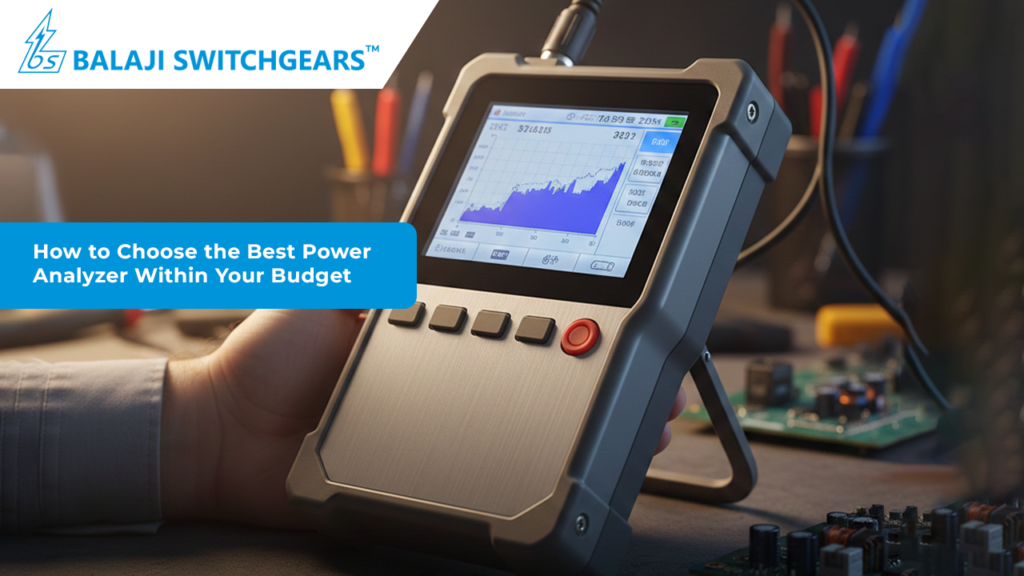
Power systems are at the heart of every industrial and commercial operation. Whether you are managing a factory floor, a data center, or a commercial facility, understanding electrical behavior is key to reducing losses, improving efficiency, and preventing costly downtime. This is where a power analyser becomes essential.
Yet, for many engineers and procurement professionals, the challenge isn’t just buying a power analyser it’s how to choose a power analyser that fits both performance needs and budget constraints. Choosing the wrong unit can result in inaccurate readings, recurring maintenance costs, and an inability to diagnose real power distribution issues.
In this guide, we break down the process of selecting the best power analyser for your needs without overpaying for features you don’t need.
What Is a Power Analyser and Why You Need One
A power analyser is an instrument used to measure and analyse electrical parameters such as:
- Voltage and current
- Power (active, reactive, apparent)
- Power factor
- Frequency
- Harmonics and power quality
- Energy consumption trends
Unlike simpler energy meters, power analysers provide detailed diagnostics that help engineers understand inefficiencies, detect power quality issues, and make informed decisions.
In modern industrial environments, power quality problems like harmonics, voltage dips, and load imbalance can cause serious equipment damage. A reliable power analyser helps identify these issues before they escalate.
Think Before You Buy: Identify Your Goals
Before exploring models and prices, the most important step is defining why you need the analyser.
Ask yourself:
- What electrical parameters do I need to measure?
- Do I need power quality analysis (harmonics, THD)?
- Is remote monitoring or data logging required?
- What’s my system voltage and current range?
- Am I diagnosing faults or optimizing usage?
Your answers determine which category of power analyser you should consider, preventing overspending on unnecessary features.
Feature Checklist: What Matters Most
When evaluating power analysers, not all features contribute equally to value. Focus on the essentials first.
1. Measurement Accuracy
Accuracy defines how close your readings are to real electrical conditions. A low-accuracy analyser might lead to incorrect conclusions, even if it’s low cost.
- Choose an analyser with ≥1% accuracy for most industrial applications.
- For power quality studies or energy audits, higher precision may be necessary.
2. Parameter Coverage
Not all analysers measure the same parameters. Decide if you simply need basic electrical quantities (V, A, W, kWh) or advanced power quality metrics (THD, harmonics up to 50th order, unbalance).
3. Data Logging and Memory
A key feature of modern analysers is recording trends over time. If you need to analyse variations across daily cycles, ensure the unit has built-in memory and flexible logging intervals.
4. Display and Usability
A readable, intuitive display helps with in-the-field assessment. Colour displays, multi-parameter views, and easy navigation can save time.
5. Communication and Integration
If your system uses SCADA, remote monitoring, or IoT dashboards, choose a power analyser with communication ports like:
- Ethernet
- Modbus
- USB
- RS485
These interfaces help you integrate measurement data into automation systems.
Categories of Power Analysers and Budget Considerations
1. Entry-Level Power Analysers
Best for: Basic voltage, current, power, and energy monitoring
Typical Use: Small commercial buildings, basic factory panels
Ideal If: Your primary need is trend monitoring and simple reports
Budget Tip: These models are economical and ideal for general performance needs without advanced diagnostics.
2. Mid-Range Power Analysers
Best for: Integrated power and power quality monitoring
Typical Use: Medium industrial plants, energy audits, compliance reporting
Ideal If: You need harmonics analysis, event logging, and moderate communication features
Budget Tip: Mid-range units deliver high value for money by combining measurements and quality analysis within a reasonable price bracket.
3. High-End Power Quality Analysers
Best for: Detailed diagnostics, advanced power quality studies
Typical Use: Large manufacturing plants, data centers, critical infrastructure
Ideal If: You need real-time PQ indices, deep logging, multi-channel analysis
Budget Tip: Choose only if your application explicitly requires advanced PQ metrics; otherwise, a mid-range analyser is sufficient.
How to Choose a Power Analyser: Step-by-Step
Here’s a structured approach to selecting the right power analyser:
Step 1: Define Your Application Scope
- Are you monitoring energy consumption or diagnosing faults?
- Do you require power quality indices like THD and harmonics?
Match your application to the features before considering cost.
Step 2: Identify Essential Specifications
Fill in this quick checklist:
| Requirement | Your Ideal Value |
| Operating Voltage Rating | e.g., up to 600 V, 1 kV |
| Current Range | e.g., up to 1000 A |
| Parameters Needed | V, A, W, PF, THD, Harmonics |
| Accuracy Class | ±0.5%, ±1% |
| Logging Capability | Required / Not Required |
| Communication (Modbus/Ethernet) | Required / Not Required |
Your answers help narrow models before price comparison.
Step 3: Prioritise Key Features
Not all features add equal value. For example:
- Remote communication may be essential for some.
- Built-in memory is crucial for trend analysis.
- Advanced PQ features matter mostly when diagnosing power issues or meeting compliance.
Only pay extra for what you truly need.
Step 4: Compare Quotations and Warranty
Price differences can be wide. Compare based on:
- Included accessories (CTs, cabling)
- Warranty periods
- Technical support availability
- Calibration certificates
A slightly higher upfront cost with strong support often pays off in the long run.
Power Analyser Price vs Value: What to Watch For
A low-cost power analyser may seem appealing, but beware of:
- Limited measurement accuracy
- Lack of memory or logging
- No communication options
- No future expandability
Rather than focusing only on short-term price, evaluate the long-term value delivered.
Common Mistakes to Avoid When Choosing a Power Analyser
1. Selecting Based on Price Alone
A low price often means limited features or poor reliability. Choose based on suitability, not just cost.
2. Ignoring Accuracy Specifications
Poorly specified accuracy can lead to misleading energy usage analysis.
3. Overlooking Communication Needs
If you plan to integrate with automation or data systems, check communication protocols early.
4. Forgetting Environmental Conditions
Industrial settings may require ruggedized units with high IP ratings or dust resistance.
Practical Example: Choosing Within Budget
Suppose your facility needs:
- Voltage, current, and power monitoring
- Event logging for 72 hours
- Remote retrieval of logged data
Using the steps above:
- You identify you need mid-range capabilities.
- You shortlist models with at least ±1% accuracy, internal memory, and Modbus port.
- Compare quotes that include CTs and cables.
- Choose a unit with a 2-year warranty and local support.
This process ensures you select the right power analyser without overspending on unnecessary high-end features.
The Role of Training and Support
Even the best power analyser can underperform if the team isn’t trained. Evaluate suppliers that provide:
- User training
- Technical support
- Calibration services
- Software updates
Reliable after-sales support increases confidence and extends equipment lifespan.
For organizations seeking expert guidance in selecting and sourcing quality power analysers, Balaji Switchgears offers professional assistance tailored to industrial and commercial requirements. With strong product knowledge and customer-focused service, Balaji Switchgears helps businesses compare models, evaluate features, and choose a power analyser that fits both technical needs and budget constraints.
By partnering with trusted suppliers like Balaji Switchgears, companies can ensure genuine products, reliable warranties, and ongoing technical support—making their investment in a power analyser both cost-effective and future-ready.
Final Thoughts
Choosing the right power analyser doesn’t mean buying the most expensive unit. Instead, it means understanding how to choose a power analyser that aligns with your technical requirements, integrates smoothly with your systems, and fits your budget.
By defining your goals, focusing on essential features, comparing specifications responsibly, and avoiding common pitfalls, you can find a power analyser that delivers high performance without overspending.
A smart investment today leads to better power quality insights, improved operational reliability, and cost savings over the long run.