
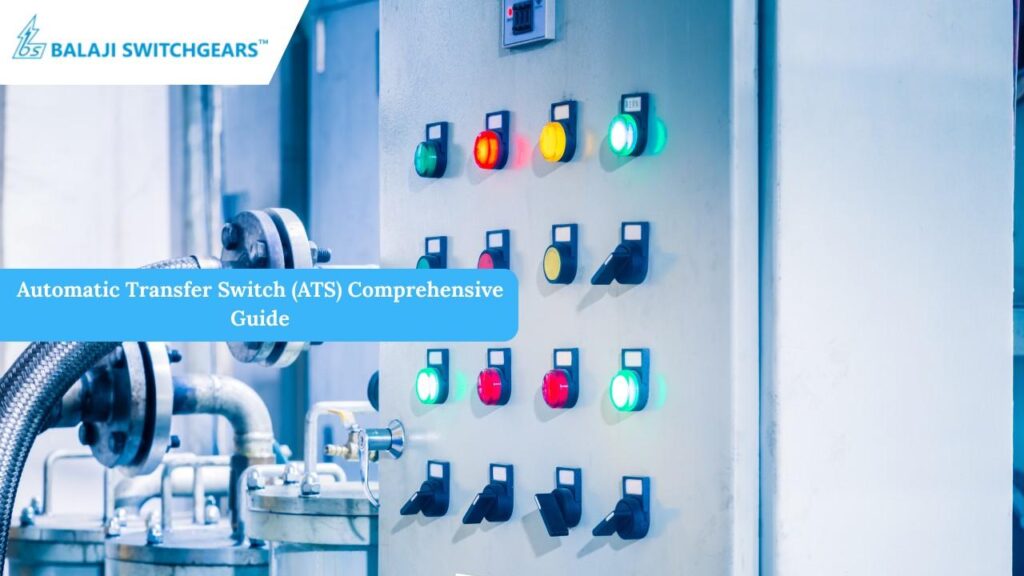
In today’s power‑dependent world, even a brief interruption can disrupt operations, damage equipment, or compromise safety. An Automatic transfer switch (ATS) plays a vital role in ensuring seamless power continuity by monitoring electrical sources and swiftly switching to a backup supply when needed. Whether you are managing industrial plants, commercial buildings, healthcare facilities, or residential complexes, understanding how an Automatic transfer switch (ATS) works and why it matters is essential.
Balaji Switchgears supplies high‑quality ATS systems as part of reliable power distribution solutions. This comprehensive guide explains the principles, components, types, benefits, common applications, and selection tips for ATS systems, helping you make well‑informed decisions when designing or upgrading electrical setups.
What Is an Automatic Transfer Switch (ATS)?
An Automatic transfer switch (ATS) is an intelligent, self‑operating device designed to automatically transfer electrical load from the primary utility power source to a backup source such as a generator or alternate utility when it detects a failure or abnormal condition in the main supply. When utility power is restored, the ATS switches the load back seamlessly to normal operation.
This automation ensures minimum disruption during outages and protects critical loads without the need for manual intervention.
How Does an Automatic Transfer Switch Work?
An ATS continuously monitors electrical parameters such as voltage, frequency, and phase from the primary power source. When fluctuations or a complete outage are detected, the ATS initiates a predefined transfer sequence to maintain power supply continuity.
Typical ATS Operation Steps
- Monitoring: The ATS constantly checks the utility power’s quality and stability.
- Detection: A fault or outage triggers the ATS to check for the readiness of the backup source.
- Backup Activation: The ATS signals the generator or alternate source to start and stabilise.
- Load Transfer: Once the backup source is ready, the ATS safely disconnects from the utility and connects to the backup.
- Restoration: When utility power returns and is stable, the ATS shifts the load back automatically.
This entire process can occur in a matter of milliseconds, preserving continuity for sensitive equipment.
Key Components of an Automatic Transfer Switch
An ATS typically consists of the following elements:
- Control Unit: The brain that detects power conditions and manages switching logic.
- Voltage and Frequency Sensors: These constantly assess electrical parameters to determine the presence and quality of power.
- Power Contacts: Heavy‑duty contacts handle the actual switching of electrical load.
- Transfer Mechanism: Executes the changeover safely.
- Status Indicators: Provide visual feedback on active power source and system health.
- Protection Circuits: Guard against electrical faults and ensure safe operation.
These components work together to ensure that the ATS responds quickly and reliably to power fluctuations or failures.
Different Types of Automatic Transfer Switches
ATS systems come in various configurations, each suited for specific applications and needs:
1. Single‑Phase ATS
Designed for smaller installations such as homes, offices, or small commercial environments where the load is relatively light.
2. Three‑Phase ATS
Used in industrial settings or larger commercial buildings where three‑phase power is standard. These systems handle higher loads and are often integrated with large generators.
3. Delayed Transition ATS
Provides a short intentional gap between disconnecting from the primary source and connecting to the backup. This is ideal for protecting motor loads and large inductive equipment from torque spikes.
4. Closed‑Transition ATS
Also known as make‑before‑break, this method connects the backup source slightly before disconnecting the primary to avoid any power gap, which is crucial for extremely sensitive equipment.
5. Manual Override ATS
Some automatic systems include a manual control option for maintenance or testing, giving users flexibility when needed.
Benefits of Using an Automatic Transfer Switch
Installing an Automatic transfer switch (ATS) offers several advantages across residential, commercial, and industrial applications:
1. Uninterrupted Power Supply
An ATS ensures load continuity during power outages by switching quickly to a backup source, often in milliseconds.
2. Enhanced Operational Reliability
Critical systems such as servers, life‑safety equipment, data center infrastructure, and industrial machinery benefit from immediate power transfer without human intervention.
3. Automatic Generator Start/Stop
Many ATS models interface directly with standby generators, automatically starting them during outages and stopping them when utility power is restored.
4. Improved Safety
By automatically managing the transfer of power, ATS units prevent unsafe backfeeding into the utility grid and eliminate unsafe manual generator connections.
5. Less Downtime and Reduced Losses
Reduced manual intervention means lower risk of extended outages and operational disruptions, translating to cost savings and increased productivity.
6. Compliance and Peace of Mind
In many industrial and healthcare environments, regulations require seamless backup power systems. ATS systems help meet these standards while delivering reliable performance.
Common Applications of Automatic Transfer Switches
Industrial Facilities
Manufacturing plants, process industries, and heavy‑duty installations depend on ATS systems to protect machinery, prevent costly downtime, and maintain continuous operations.
Commercial Buildings
Office towers, shopping complexes, and hotels use ATS units to keep critical services like lighting, communication systems, and HVAC running smoothly during power interruptions.
Healthcare Institutions
Hospitals, clinics, and healthcare facilities leverage ATS systems to safeguard life‑saving equipment and ensure patient safety even during grid failures.
Data Centers
Data integrity is mission‑critical. Automatic transfer switches maintain server uptime and prevent data loss by ensuring immediate power backup.
Telecommunications
Network infrastructure relies on steady power for communication continuity, making ATS essential in telecom facilities.
Residential Backup Systems
Homes with standby generators and critical appliances benefit from automatic transfer switches that eliminate manual switching effort and offer seamless operation.
Selecting the Right Automatic Transfer Switch
Choosing the right ATS depends on several technical and practical criteria:
1. Load Rating and Current Capacity
Ensure the ATS can handle the maximum expected electrical load, including surge currents. Matching the voltage and current ratings to your load profile is critical.
2. Transfer Time Requirements
Different applications tolerate different transfer delays. Sensitive electronics and servers may require fast‑acting or closed‑transition ATS units to prevent disruptions.
3. Communication and Control Interfaces
Modern ATS devices offer remote monitoring, connectivity with building management systems, and programmable logic settings—important features for large installations.
4. Environmental Durability
Industrial environments may demand rugged enclosures and protection ratings suitable for dust, moisture, or harsh conditions.
5. Standards and Compliance
Verify that the ATS meets local and international electrical safety standards, including those relevant to standby power and emergency systems.
Why Choose Balaji Switchgears for ATS Solutions
Balaji Switchgears delivers reliable, durable ATS solutions designed to meet diverse power continuity needs across industrial, commercial, and residential applications. Whether you require a compact single‑phase unit or a heavy‑duty three‑phase system, Balaji Switchgears combines quality engineering with application expertise to ensure optimum performance.
With a focus on support, compliance, and long‑term reliability, Balaji Switchgears helps you select and implement the right ATS system tailored to your power system requirements.
Conclusion
An Automatic transfer switch (ATS) is an indispensable component of modern power backup systems, offering fast, reliable, and safe switching between primary and backup sources. By eliminating the need for manual control and providing seamless operation, ATS systems significantly enhance power continuity, protect mission‑critical loads, and improve operational efficiency.
From industrial plants to hospitals and data centers, ATS technology keeps essential systems running—without interruption—and forms the backbone of resilient electrical infrastructure. Partnering with trusted suppliers like Balaji Switchgears ensures that your automatic transfer switch solution is robust, compliant, and future‑ready.