
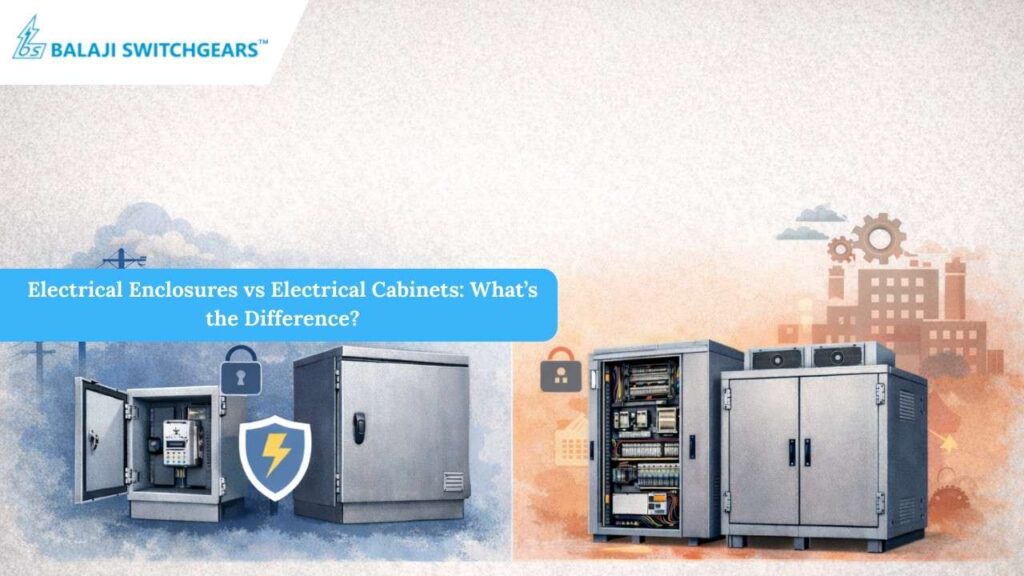
In industrial, commercial, and even residential electrical installations, choosing the right protective housing for your electrical components is critical. Two terms that often cause confusion are electrical enclosures and electrical cabinets. Though they both serve to protect electrical equipment, they differ in design, application, protection level, and functionality.
At Balaji Switchgears, we frequently guide customers through these decisions to ensure safe, compliant, and reliable power infrastructure. In this comprehensive post, we’ll explain the differences between electrical enclosures and electrical cabinets, when you should choose one over the other, how standards and ratings influence selection, and why products like Hoffman electrical enclosures are trusted for demanding applications.
Introduction: Why These Terms Matter
Electrical systems are vulnerable to dust, moisture, mechanical impact, contamination, and unauthorized access. Without proper housing, these hazards can lead to equipment failure, safety risks, and costly downtime.
- Electrical enclosures are protective housings that shield electrical components from environmental factors and human contact.
- Electrical cabinets are a type of enclosure but with additional structural features, usability enhancements, and often higher customization and integration capacity.
Understanding the difference helps you make the right choice for your electrical panels, power distribution boards, automation controls, and instrumentation setups.
What Are Electrical Enclosures?
Electrical enclosures are protective housings designed primarily to safeguard electrical components such as relays, terminal blocks, meters, and small control modules from environmental conditions and accidental contact.
Key characteristics of electrical enclosures include:
- Protection Focus – They protect against dust, water, and accidental human contact.
- Simpler Design – Typically box‑like with a door or removable panel.
- Mounting Style – Often wall‑mount or small free‑standing.
- Used For – Housing of smaller electrical devices, junction points, and instrumentation.
An example of a well‑engineered product line is Hoffman electrical enclosures, known for robust sealing, high NEMA/IP ratings, and corrosion resistance. Hoffman enclosures are widely used in industrial settings where environmental protection is essential even for basic control or junction points.
What Are Electrical Cabinets?
Electrical cabinets are more sophisticated housings that provide a greater level of structural support, organization, and often accommodate larger or more complex electrical systems.
Key features include:
- Functional Design – Built to house larger equipment such as breakers, PLCs, drives, panel meters, and control components.
- Internal Framework – Includes mounting rails, internal panels, shelves, and cable management systems.
- Accessibility – Doors, hinges, locks, and often internal compartments are designed for ease of maintenance.
- Usage – Used for power distribution panels, control panels, automation racks, and modular systems.
Electrical cabinets often have integrated features such as knock‑outs for modular expansion, cable ducts, and sometimes integrated thermal management like ventilation or cooling.
Direct Comparison: Enclosure vs Cabinet
| Aspect | Electrical Enclosures | Electrical Cabinets |
| Primary Function | Protection against environment & contact | Protection + functional housing for complex systems |
| Typical Use | Smaller devices, junction boxes, basic panels | Power distribution panels, control systems |
| Design Complexity | Simple | Complex |
| Internal Structure | Minimal | Mounting rails, shelves, cable ducts |
| Size | Compact to medium | Medium to large |
| Accessibility | Basic door/panel | Hinged doors, locks, removable panels |
| Customisation | Moderate | High |
| Examples | Junction box enclosure, meter enclosure | Distribution board cabinet, PLC cabinet |
Key Differences Explained
1. Design and Structural Complexity
- Electrical enclosures are primarily protective shells. Their design focuses on maintaining ingress protection and safety barriers.
- Electrical cabinets combine protection with functional design. They can house multiple components in an organized way and provide structured access for service and expansion.
This difference means cabinets are generally larger and more adaptable to complex system requirements.
2. Purpose and Application
- Electrical enclosures are ideal for protecting singular or small groups of components from environmental exposure. This includes junction boxes, small control units, or isolated meters.
- Electrical cabinets are purpose built for distributed systems that require structured wiring, modular components, and space for future upgrades. Cabinets often serve as the backbone of a power distribution or automation control panel.
3. Accessibility and Maintenance
Easy access for inspection, wiring, and maintenance is crucial for larger systems:
- Enclosures provide basic access, usually one door or removable panel.
- Cabinets offer improved access with hinged doors, internal panels, door seals, and locking mechanisms. They often include cable management and labeling provisions that make system integration and maintenance easier.
4. Mounting and Installation
- Electrical enclosures are commonly wall‑mount or standalone for small applications.
- Electrical cabinets may be floor‑standing, wall‑mounted, or integrated into panel lines. Their broader footprint supports heavier loads and multiple assemblies.
5. Customisation and Expandability
Electrical cabinets often provide higher customisation options including:
- Segmented compartments
- Internal shelves and DIN rails
- Modular cable channels
- Thermal management accessories (fans, air conditioners)
Electrical enclosures may allow some customization, but typically focus first on protection rather than assembly complexity.
Standards and Protection Ratings
Understanding ratings is essential when selecting either an electrical enclosure or cabinet:
NEMA Ratings (National Electrical Manufacturers Association)
- Type 1 – Interior protection against light dust and contact
- Type 4/4X – Protection against water spray and corrosion (good for outdoor use)
- Type 12 – Protection against dust and dripping water (indoor industrial)
- Type 3R – Outdoor protection against rain and snow
IP Ratings (Ingress Protection)
IP ratings specify protection against solids/liquids:
- IP54 – Limited dust ingress, splash protection
- IP65/IP66 – Dust tight and water protected for outdoor environments
High quality Hoffman electrical enclosures often carry NEMA 4X and IP66 ratings, making them suitable even for outdoor or corrosive industrial areas.
When to Choose an Electrical Enclosure
Choose an electrical enclosure when:
- Housing simple or isolated electrical components.
- Protection against environmental elements is a priority.
- Space is limited and system complexity is low.
- Budget constraints favor protective housing over fully featured cabinets.
Examples:
- Junction boxes for field wiring
- Small local control units
- Metering instrumentation enclosures
- Outdoor power equipment housings
When to Choose an Electrical Cabinet
Choose an electrical cabinet when:
- You need to organize multiple components in a structured system.
- Cable management, maintenance access, and expansion flexibility matter.
- The system includes modular or programmable devices like PLCs, drives, or distribution breakers.
- Safety regulations require structured and labeled assemblies.
Examples:
- Main power distribution panels
- Motor control centers (MCC)
- PLC and automation control racks
- Multi‑circuit power panels
Benefits of Using Hoffman Electrical Enclosures
When your project demands top‑tier environmental protection and durability, Hoffman electrical enclosures are a strong choice. Some key benefits include:
High Protection in Harsh Environments
Hoffman enclosures are engineered with superior seals, gaskets, and construction that achieve high NEMA/IP protection levels suitable for rain, dust, and corrosive conditions.
Durability and Material Quality
Available in materials like stainless steel, mild steel with protective coating, and corrosion‑resistant composites, Hoffman products stand up to demanding industrial or outdoor applications.
Compliance and Safety
Hoffman enclosures are built to meet UL, CSA, and IEC standards—helping your installation comply with electrical codes and inspection requirements.
Customisation and Accessories
Cable glands, knockouts, mounting plates, and internal panels can be added or modified to tailor the enclosure to specific installation needs.
Practical Buyer Guidance: What to Consider
When specifying either electrical enclosures or cabinets:
1. Environment
Understanding exposure to moisture, dust, UV, or corrosive elements helps determine the protection rating required.
2. Load and System Complexity
Higher complexity systems generally need cabinet solutions for organization and maintenance.
3. Space and Mounting Conditions
Wall‑mount vs floor‑standing preferences impact selection.
4. Future Expansion
If your system may grow (additional circuits or modules), a cabinet with expansion capacity is preferable.
5. Budget vs Performance
Electrical enclosures are often lower cost, but cabinets deliver long‑term value in complex installations.
Partnering with an experienced supplier such as Balaji Switchgears ensures your electrical housing choice aligns with performance, safety, and compliance requirements.
Case Example: Outdoor Power Distribution
An outdoor power distribution installation requires protection against rain, dust, and accidental contact. A standard electrical enclosure with high NEMA and IP ratings such as a Hoffman electrical enclosure with NEMA 4X and IP66—can protect panel components from harsh conditions. If the distribution setup includes multiple breakers, control devices, meters, and automation interfaces, a floor‑standing electrical cabinet with internal rails, labeling, and cable management would deliver better long‑term functionality and maintainability.
This example shows how the choice between enclosure and cabinet depends on both the protective requirements and the functional organization of your electrical system.
Conclusion
While both electrical enclosures and electrical cabinets serve to protect electrical systems, they differ significantly in design, complexity, application, and usability. Enclosures are ideal for straightforward protective needs, especially in hazardous or outdoor locations. Cabinets, on the other hand, offer structured housing and flexibility for complex or expansion‑ready systems.
Understanding these differences and the protection ratings that support them helps you build safer, more reliable electrical installations. Products like Hoffman electrical enclosures deliver rugged protection when environmental hazards are a concern, and well‑designed cabinets make electrical panel management easier and more scalable.
When planning your next electrical project, consult with trusted partners like Balaji Switchgears to ensure correct selection and implementation of both enclosures and cabinets tailored to your operational needs.