
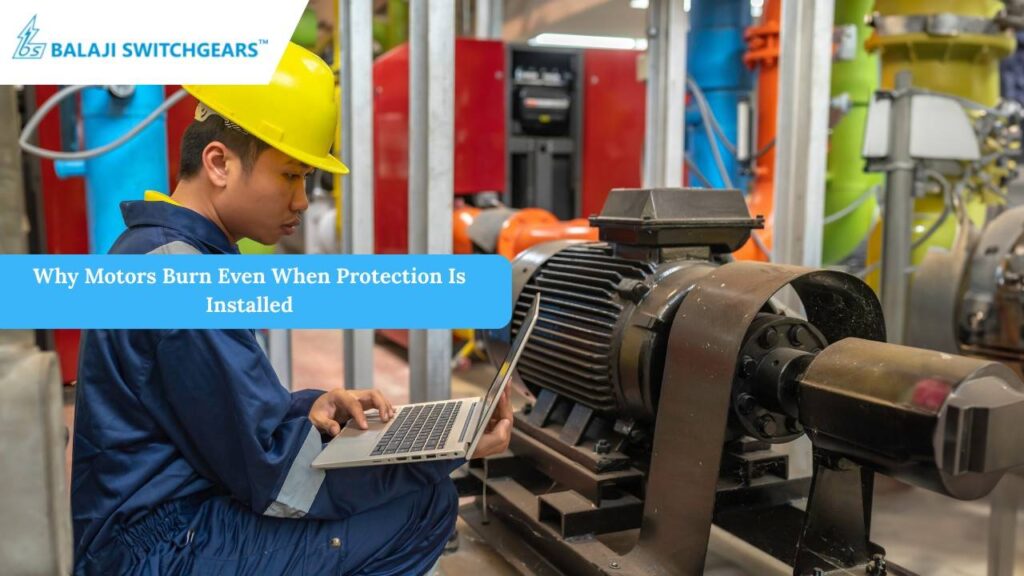
Electric motors are the backbone of industrial operations. From pumps and compressors to conveyors and heavy manufacturing machines, motors power almost every process in modern factories. Because motors are such critical assets, industries invest heavily in protective devices such as overload relays, circuit breakers, motor protection relays, and thermal protection systems.
Yet despite having protection systems installed, motor burnouts continue to occur in many factories. Maintenance teams are often surprised when a motor fails even though protective equipment was supposedly designed to prevent such damage.
The truth is that motor failures are rarely caused by a single factor. In most cases, they occur due to incorrect selection, improper settings, or poor coordination of motor protection devices.
Understanding these mistakes can help engineers, OEMs, and plant managers prevent costly motor damage and improve the reliability of their industrial electrical systems.
This blog explains why motors burn even when protection systems are installed and highlights the most common selection and setting mistakes industries must avoid.
Understanding Motor Protection in Industrial Systems
Motor protection systems are designed to prevent damage caused by electrical faults, overload conditions, and abnormal operating situations.
Typical motor protection devices used in industrial applications include
• Motor circuit breakers
• Thermal overload relays
• Motor protection relays
• Fuses and contactors
• Phase failure protection devices
• Temperature monitoring systems
These devices monitor electrical parameters such as current, voltage, and temperature. When abnormal conditions are detected, the protection system disconnects the motor from the power supply before serious damage occurs.
However, protection devices only work effectively when they are properly selected and correctly configured.
Why Motors Still Burn Despite Protection Systems
Many industries assume that simply installing a protection device is enough to safeguard their motors. In reality, protection systems must be designed and configured according to the specific motor characteristics and operating conditions.
Several common mistakes can cause protection systems to fail in preventing motor burnout.
Incorrect Motor Protection Device Selection
One of the most frequent causes of motor failure is choosing the wrong protection device.
Different types of motors require different protection strategies depending on factors such as
• Motor power rating
• Starting current characteristics
• Duty cycle
• Load type
• Operating environment
If the protection device is not suitable for the motor application, it may not detect dangerous operating conditions.
For example, using a standard overload relay for a motor that experiences frequent starting cycles may lead to nuisance tripping or insufficient protection.
Similarly, motors operating in heavy duty industrial applications may require advanced motor protection relays rather than simple overload protection.
Selecting the correct protection device is essential to ensure effective motor protection.
Improper Overload Relay Settings
Even when the correct protection device is installed, incorrect settings can significantly reduce its effectiveness.
Thermal overload relays must be adjusted according to the motor’s rated current. If the relay setting is too high, the motor may operate under overload conditions for an extended period before the protection system activates.
This excessive heating can damage motor insulation and eventually cause the motor to burn.
On the other hand, if the relay setting is too low, the motor may trip frequently during normal operation, causing unnecessary production interruptions.
Accurate relay settings based on motor nameplate data are essential for proper motor protection.
Ignoring Motor Starting Characteristics
Many motors draw a high inrush current during startup. This current can be several times higher than the rated operating current.
If protection devices are not configured to accommodate this temporary current surge, the system may either trip unnecessarily or fail to provide proper protection.
Improper coordination between motor starting current and protection device settings can allow dangerous conditions to persist.
Engineers must carefully evaluate motor starting characteristics when selecting protection equipment.
Lack of Phase Protection
Three phase motors are particularly vulnerable to phase related problems such as
• Phase loss
• Phase imbalance
• Reverse phase sequence
If a phase failure occurs and protection systems do not detect it quickly, the motor may continue operating with excessive current in the remaining phases.
This condition generates extreme heat within the motor windings and can cause rapid insulation damage.
Installing dedicated phase protection relays helps prevent these dangerous conditions.
Voltage Fluctuations and Electrical Disturbances
Industrial power systems often experience voltage fluctuations due to heavy electrical loads, poor power quality, or unstable supply conditions.
Low voltage can cause motors to draw higher current, leading to overheating.
High voltage may stress insulation systems and accelerate motor deterioration.
Protection devices that only monitor current may not detect these voltage related issues.
Advanced motor protection relays that monitor both voltage and current provide better protection against such problems.
Improper Coordination Between Protection Devices
Industrial motor circuits often include multiple protective devices such as fuses, circuit breakers, and overload relays.
If these devices are not properly coordinated, the wrong device may trip during a fault condition.
In some cases, the motor may remain connected to the power supply long enough for serious damage to occur.
Protection coordination ensures that faults are detected and cleared quickly by the appropriate device.
Proper coordination reduces equipment damage and improves system reliability.
Environmental Factors Affecting Motor Protection
Industrial environments can significantly impact motor performance and protection systems.
Motors installed in harsh environments may face challenges such as
• High ambient temperatures
• Dust and contamination
• Moisture exposure
• Chemical vapors
These conditions increase the thermal stress on motors and can accelerate insulation degradation.
If protection settings do not account for environmental conditions, motors may overheat even under normal load conditions.
Using motors and protection devices designed for the operating environment helps prevent such failures.
Poor Installation and Maintenance Practices
Even the best protection systems cannot prevent motor damage if installation and maintenance practices are inadequate.
Loose electrical connections, improper cable sizing, and poorly installed protection devices can create electrical resistance and overheating.
Regular inspection and maintenance of motor circuits are essential to ensure that protection systems function correctly.
Maintenance teams should periodically verify protection settings and inspect electrical connections to prevent unexpected failures.
Benefits of Advanced Motor Protection Systems
Modern motor protection relays provide several advantages compared to traditional protection devices.
These advanced systems can monitor multiple parameters simultaneously, including
• Current imbalance
• Voltage levels
• Thermal overload conditions
• Phase sequence problems
• Ground faults
Many modern protection systems also offer communication capabilities that allow operators to monitor motor performance through automation systems.
This helps industries detect potential issues early and prevent costly equipment damage.
Choosing the Right Motor Protection Components
Industrial motor protection systems should always be designed using high quality electrical components from trusted manufacturers.
Reliable circuit breakers, relays, and automation devices improve the safety and durability of electrical systems.
Working with experienced industrial suppliers ensures that engineers receive proper guidance when selecting motor protection equipment.
Correct product selection helps industries design robust motor protection systems that prevent failures and improve operational efficiency.
Conclusion
Motor burnouts remain a common challenge in industrial environments even when protection systems are installed. In most cases, the problem is not the absence of protection but incorrect device selection, improper settings, or poor coordination between protection components.
Mistakes such as incorrect overload relay settings, lack of phase protection, poor protection coordination, and ignoring environmental factors can significantly increase the risk of motor damage. By carefully selecting protection devices, configuring them according to motor specifications, and performing regular maintenance, industries can greatly reduce the chances of motor failures and improve equipment reliability.For industries seeking reliable electrical protection components and automation solutions, partnering with experienced suppliers is essential. Balaji Switchgears Pvt. Ltd. is a trusted provider of industrial electrical products, supplying genuine components from leading global manufacturers. As an authorized distributor, Balaji Switchgears Pvt. Ltd. supports OEMs, panel builders, and industrial facilities with expert product selection, dependable electrical solutions, and technical guidance. By sourcing motor protection components through Balaji Switchgears Pvt. Ltd., industries can build reliable electrical systems that protect critical motors and ensure smooth factory operations.