
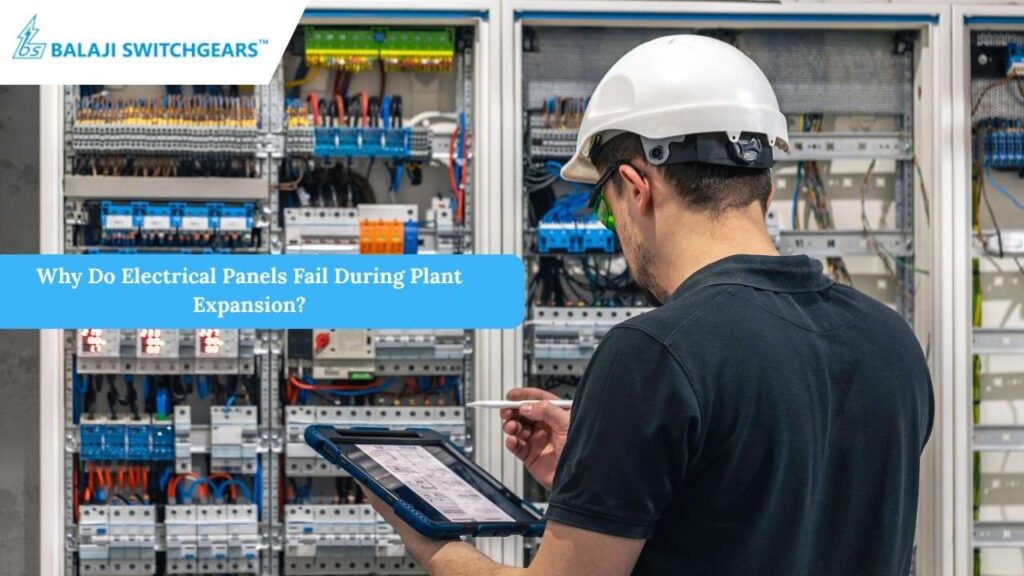
Industrial plants rarely stay the same for long. As production grows, new machinery, automation systems, and power requirements are added to increase capacity. This process commonly known as plant expansion is essential for business growth. However, one of the most common and costly issues during expansion is the failure of electrical panels.
Electrical panels are the backbone of any industrial power distribution system. They control, distribute, and protect electrical circuits that keep machines and automation systems running. When expansion occurs without proper planning or panel design, electrical failures can happen frequently, leading to downtime, equipment damage, and safety risks.
For OEMs (Original Equipment Manufacturers), panel builders, and plant engineers, understanding the root causes of panel failures during expansion is critical. In this blog, we explore the key reasons electrical panels fail during plant upgrades and the design mistakes OEMs must avoid to ensure reliable industrial operations.
Understanding the Role of Electrical Panels in Industrial Plants
Electrical panels also known as control panels, distribution boards, or switchgear panels are responsible for managing and distributing power across machines and equipment within a facility.
They typically include:
- Circuit breakers and protection devices
- Contactors and relays
- Motor starters and drives
- PLCs and control modules
- Power distribution busbars
- Monitoring and protection systems
These components work together to maintain safe and stable electrical operations. However, when plant expansion increases the load or introduces new automation systems, panels designed for earlier capacity may struggle to handle the additional stress.
If the original design did not account for future expansion, Panel failures become more likely.
Why Electrical Panels Fail During Plant Expansion
There are several technical reasons why electrical panels begin failing when production capacity increases. Most of them trace back to design limitations or improper planning during the original installation.
1. Incorrect Load Calculation
One of the biggest causes of electrical panel failure during expansion is underestimating future power requirements.
Many OEMs design panels based only on current load conditions. When additional machines are installed later, the panel may operate beyond its safe limits.
Improper load calculations can result in:
- Frequent breaker tripping
- Overheating cables and busbars
- Voltage drops across circuits
- Reduced equipment life
Electrical systems designed without considering future expansion may experience permanent overload conditions, which can eventually damage components or insulation.
Best practice:
Industrial electrical panels should typically operate at 70–80% of their rated capacity, leaving spare capacity for load growth and fluctuations.
2. Overcrowded Panel Design
Another major design mistake is overcrowding components inside the panel enclosure.
During plant expansion, engineers often try to add new components into an already full panel rather than installing a new one. This creates several problems:
- Reduced airflow inside the enclosure
- Excessive heat accumulation
- Limited maintenance access
- Higher risk of wiring errors
Poor panel layout can shorten the lifespan of electrical devices and increase the likelihood of faults. Overcrowded panels also make troubleshooting difficult for maintenance teams.
Best practice:
A well-designed industrial panel should include 20–30% spare space for additional devices and wiring.
3. Poor Thermal Management
Heat is often called the “silent killer” of electrical components.
When plants expand, new drives, PLC modules, or motor starters may generate additional heat inside the panel. Without proper cooling or ventilation, internal temperatures rise rapidly.
High temperatures can cause:
- Insulation breakdown
- Contact resistance increase
- Premature failure of relays and contactors
- Reduced life of power electronics
Industrial panels operating in hot environments must be designed with proper airflow, ventilation fans, or cooling systems. Excessive heat significantly accelerates component degradation and can cause repeated failures.
4. Improper Cable Management
As plants grow, more wiring is added to support additional machines, sensors, and automation systems. Without proper planning, this leads to cable congestion inside panels.
Common cable-related mistakes include:
- Mixing power and control wiring
- Overfilled cable ducts
- Poorly terminated conductors
- Lack of labeling or routing
Improper cable management can cause electrical interference, overheating, and troubleshooting difficulties. In severe cases, loose or poorly terminated connections may create hotspots that lead to equipment failure.
Best practice:
Separate power and signal cables and use proper cable ducts, tie points, and labeling systems.
5. Inadequate Protection Coordination
Protection coordination is essential in industrial electrical systems.
If protection devices such as MCBs, MCCBs, and relays are not properly coordinated, faults may cause:
- Unnecessary system shutdowns
- Cascading failures across equipment
- Damage to motors or drives
During plant expansion, engineers sometimes add new loads without updating protection settings. This results in miscoordination between protective devices, increasing the risk of electrical faults.
Correct protection coordination ensures only the affected circuit trips during a fault rather than shutting down the entire system.
6. Ignoring Environmental Conditions
Industrial electrical panels operate in challenging environments that may include:
- Dust and debris
- High humidity
- Chemical fumes
- Mechanical vibration
- Extreme temperatures
If panel enclosures are not designed for these conditions, components may deteriorate faster.
Environmental factors such as moisture, dust, and high temperatures can accelerate corrosion, insulation damage, and electrical faults in industrial switchgear systems.
When plants expand, environmental conditions inside electrical rooms may change due to increased heat generation or equipment density.
Best practice:
Use properly rated enclosures with suitable IP protection and environmental sealing.
7. Lack of Integration with Automation Systems
Modern plants rely heavily on automation systems such as PLCs, HMIs, and SCADA platforms.
When electrical panels are designed as isolated systems rather than integrated control units, expansion becomes difficult.
Lack of integration can lead to:
- Limited monitoring capabilities
- Reduced fault detection
- Inefficient energy usage
- Difficult system upgrades
Modern control panels should allow seamless communication with plant automation systems to support predictive maintenance and remote monitoring.
8. Poor Documentation and Design Planning
Another overlooked reason electrical panels fail during expansion is incomplete documentation.
Without proper design records, engineers may not know:
- Available spare capacity
- Existing protection settings
- Wiring configurations
- Load distribution across circuits
This lack of information can lead to incorrect upgrades or unsafe modifications.
Proper documentation ensures engineers can safely expand the system without compromising reliability.
Best Design Practices OEMs Should Follow
To prevent electrical panel failures during plant expansion, OEMs should follow several critical design principles.
Plan for Future Expansion
Always design electrical panels with spare capacity for future loads and automation upgrades.
Maintain Proper Panel Layout
Ensure adequate spacing between components to improve airflow and maintenance accessibility.
Implement Effective Cooling
Install ventilation systems, heat exchangers, or cooling fans where necessary.
Use Proper Cable Management
Organized wiring reduces interference, overheating, and troubleshooting time.
Select Reliable Components
Use high-quality industrial electrical components that meet international safety standards.
Perform Load Studies
Conduct detailed load analysis before upgrading electrical systems.
Ensure Protection Coordination
Verify breaker ratings and relay settings whenever new equipment is added.
The Importance of Reliable Industrial Components
Using certified electrical components from trusted manufacturers is essential for maintaining safe operations during plant expansion.
High-quality circuit protection devices, relays, sensors, and automation components improve system reliability and reduce the risk of unexpected failures.
For OEMs and industries upgrading their electrical systems, sourcing genuine components through trusted suppliers is critical to ensure performance, safety, and compliance.
Conclusion
Electrical panel failures during plant expansion are rarely caused by a single factor. Instead, they are usually the result of design mistakes, poor planning, and inadequate capacity for future growth. Common problems include incorrect load calculations, overcrowded panel layouts, poor thermal management, cable congestion, and improper protection coordination. By addressing these issues early in the design stage, OEMs can significantly reduce the risk of system failures and costly production downtime. For industries looking to upgrade or expand their electrical infrastructure, sourcing high-quality automation and electrical components from a reliable partner is essential.
Balaji Switchgears Pvt. Ltd. is a trusted supplier of industrial electrical and automation products, providing genuine components from leading global brands. As an authorized distributor, Balaji Switchgears Pvt. Ltd. supports OEMs, panel builders, and industries with expert guidance, product availability, and technical assistance.
By working with experienced partners like Balaji Switchgears Pvt. Ltd., industries can design reliable electrical systems that support safe operations, smooth plant expansion, and long-term industrial efficiency