
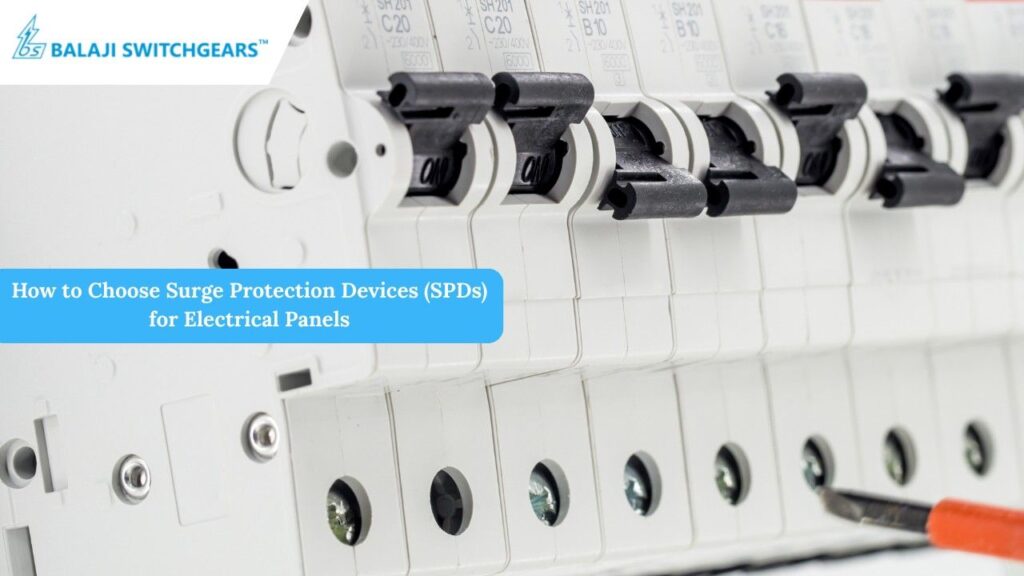
Electrical systems today power everything from industrial automation and manufacturing equipment to commercial buildings and data centers. As systems become more sophisticated and sensitive, the risk posed by transient voltage surges also increases.
Voltage surges can originate from lightning strikes, switching operations, grid disturbances, or internal electrical faults. These sudden spikes in voltage can damage sensitive equipment, interrupt operations, and cause costly downtime.
This is where Surge Protection Devices (SPDs) become essential. Installed within electrical panels, SPDs protect electrical infrastructure by diverting excess voltage safely to ground before it can damage connected equipment.
However, selecting the right SPD requires careful evaluation of system characteristics, environmental conditions, and protection requirements. In this guide, we explore how to choose surge protection devices for electrical panels and ensure reliable protection for modern power systems.
Understanding Surge Protection Devices (SPDs)
A Surge Protection Device (SPD) is designed to protect electrical installations against transient overvoltages. These surges typically last only microseconds but can reach thousands of volts, which is enough to damage electronic components and insulation systems.
SPDs work by detecting sudden voltage spikes and redirecting the surge current to ground through low-impedance paths. This action limits the voltage level reaching connected equipment and prevents damage to electrical systems.
Surges commonly originate from:
- Lightning strikes on power lines or nearby structures
- Switching operations in electrical networks
- Motor start-ups and shutdowns
- Transformer energization
- Grid disturbances or faults
Even internal switching events account for a large portion of surge activity within electrical systems. Therefore, surge protection must be incorporated at the panel level to ensure continuous system reliability.
Why Electrical Panels Need Surge Protection
Electrical panels act as the central distribution point for power in any facility. When a surge enters the electrical system, the distribution panel becomes the first line of defense.
Without proper surge protection, the following risks may occur:
- Damage to electronic devices and control systems
- Failure of sensitive automation equipment
- Reduced lifespan of electrical components
- Production downtime in industrial facilities
- Data loss in IT and communication systems
Installing SPDs within electrical panels ensures that surge energy is diverted safely before it reaches downstream loads.
Proper surge protection also improves system stability and prevents cascading equipment failures.
Types of Surge Protection Devices
Surge protection devices are categorized into different types depending on their installation location and surge handling capacity.
Type 1 SPD
Type 1 SPDs are installed at the main service entrance or upstream of the main distribution panel. These devices are designed to handle high-energy surges, especially those caused by lightning strikes.
They are capable of discharging large impulse currents and provide the first layer of protection for the entire electrical installation.
Type 1 SPDs are commonly used in:
- Buildings with external lightning protection systems
- Industrial facilities exposed to lightning risk
- Critical infrastructure installations
Type 2 SPD
Type 2 SPDs are typically installed in distribution boards or sub-panels downstream from the main service entrance.
These devices protect against switching surges and residual lightning surges that pass through the first stage of protection.
Type 2 SPDs are widely used in commercial and industrial electrical panels because they provide secondary protection closer to sensitive equipment. (axis-india.com)
Type 3 SPD
Type 3 SPDs provide point-of-use protection and are installed close to sensitive loads such as computers, automation controllers, and communication systems.
They are designed for lower energy surges and act as the final layer of protection in a coordinated surge protection system.
Key Factors to Consider When Choosing an SPD
Selecting the right surge protection device involves evaluating several technical parameters. Understanding these factors ensures that the SPD performs effectively within the electrical system.
1. System Voltage Compatibility
The first step in choosing an SPD is matching it with the system voltage.
Electrical systems may operate at various voltage levels such as:
- 230 V single-phase systems
- 415 V three-phase systems
- Medium voltage industrial systems
The SPD must be rated for the system’s nominal voltage to ensure proper operation and protection.
2. Surge Current Capacity
Surge current capacity determines how much surge energy an SPD can safely handle.
Two key parameters are used to evaluate surge capacity:
- Iimp (Impulse Current): Used for Type 1 SPDs to indicate lightning surge handling capability
- Imax (Maximum Discharge Current): Used for Type 2 SPDs to indicate maximum surge capacity
Higher ratings provide greater safety margins and improve the lifespan of the SPD. (electrical-installation.org)
3. Voltage Protection Level (Up)
The Voltage Protection Level (Up) indicates the maximum voltage that can pass through the SPD to the protected equipment during a surge event.
Lower Up values provide better protection for sensitive electronic devices.
When choosing an SPD for electrical panels, engineers typically select devices with low protection levels to ensure downstream equipment remains safe during transient events.
4. Short Circuit Current Rating (SCCR)
Electrical panels often experience high fault currents. Therefore, the SPD must have an adequate Short Circuit Current Rating (SCCR) that matches the available fault current of the system.
If the SPD rating is lower than the panel’s fault current capacity, it may fail during extreme electrical conditions.
Ensuring proper coordination between SPDs and overcurrent protection devices such as circuit breakers or fuses is essential for safe operation.
5. Location of Installation
The location of installation determines the type and configuration of the SPD.
Typical installation points include:
- Main incoming distribution panel
- Sub-distribution boards
- Control panels and automation cabinets
- Equipment-level protection
A multi-stage surge protection strategy often provides the best results.
For example:
- Type 1 SPD at the main panel
- Type 2 SPD at sub-panels
- Type 3 SPD near sensitive equipment
This layered approach ensures effective surge energy dissipation across the electrical system.
6. Earthing and Grounding System
Surge protection works effectively only when a reliable grounding system is present.
SPDs discharge surge energy to the earth through grounding conductors. If the earthing system has high resistance, the surge may not dissipate properly, increasing the risk of equipment damage.
All SPDs should be connected to the main earthing bar or equipotential bonding system to ensure safe energy discharge. (Britec Electric Wenzhou Co., Ltd.)
7. Installation and Wiring Considerations
Proper installation plays a major role in SPD performance.
Key installation guidelines include:
- Keep SPD connection leads short and straight
- Avoid sharp bends in conductors
- Use recommended conductor sizes
- Ensure tight grounding connections
Long conductor lengths increase inductive impedance, which can reduce the effectiveness of surge protection.
Multi-Level Surge Protection Strategy
Modern electrical systems often use coordinated surge protection, which means installing multiple SPDs at different levels of the electrical network.
This strategy provides several advantages:
- Improved surge energy distribution
- Reduced stress on individual devices
- Enhanced protection for sensitive equipment
- Longer service life for SPDs
For example:
- Primary protection: Type 1 SPD at service entrance
- Secondary protection: Type 2 SPD at distribution panels
- Point-of-use protection: Type 3 SPD near critical loads
Coordinated protection ensures that surge energy is gradually dissipated as it travels through the electrical system.
Common Mistakes in SPD Selection
Improper selection or installation of surge protection devices can reduce their effectiveness.
Some common mistakes include:
- Installing only one SPD in large electrical systems
- Ignoring grounding requirements
- Choosing SPD ratings too low for the system
- Installing devices far from the panel connection point
- Lack of coordination with protective devices
Avoiding these mistakes ensures that surge protection systems perform reliably during high-energy events.
Importance of Standards and Compliance
Surge protection devices must comply with recognized international standards to ensure safety and performance.
Important standards include:
- IEC 61643 – Surge protection device standards
- IEC 62305 – Lightning protection systems
- UL 1449 – Surge protective device safety standard
These standards define testing procedures, surge current ratings, and performance requirements for SPDs.
Compliance ensures that the selected device meets industry safety expectations.
Future Trends in Surge Protection Technology
As electrical infrastructure becomes increasingly digital and interconnected, surge protection technology continues to evolve.
Emerging innovations include:
- Smart SPDs with monitoring capabilities
- Remote diagnostic features
- Integrated protection modules for renewable energy systems
- Enhanced protection for EV charging infrastructure
- Improved arc suppression and fault detection technologies
Modern surge protection devices are no longer passive safety components. They are becoming intelligent protection systems that enhance power system reliability.
Conclusion
Voltage surges are an unavoidable reality in modern electrical systems. Without proper protection, these transient events can damage equipment, disrupt operations, and lead to costly downtime.
Selecting the right Surge Protection Device (SPD) for electrical panels requires careful evaluation of system voltage, surge current capacity, installation location, grounding conditions, and protection coordination.
A well-designed surge protection strategy typically includes multiple layers of protection across the electrical distribution network. This ensures that surge energy is safely diverted away from sensitive equipment.
For industrial and commercial installations, working with experienced electrical solution providers such as Balaji Switchgears helps ensure proper selection, integration, and implementation of surge protection systems aligned with modern electrical standards.
As electrical infrastructure continues to evolve, surge protection will remain a critical component in safeguarding electrical panels, maintaining system reliability, and protecting valuable equipment from transient voltage events.