
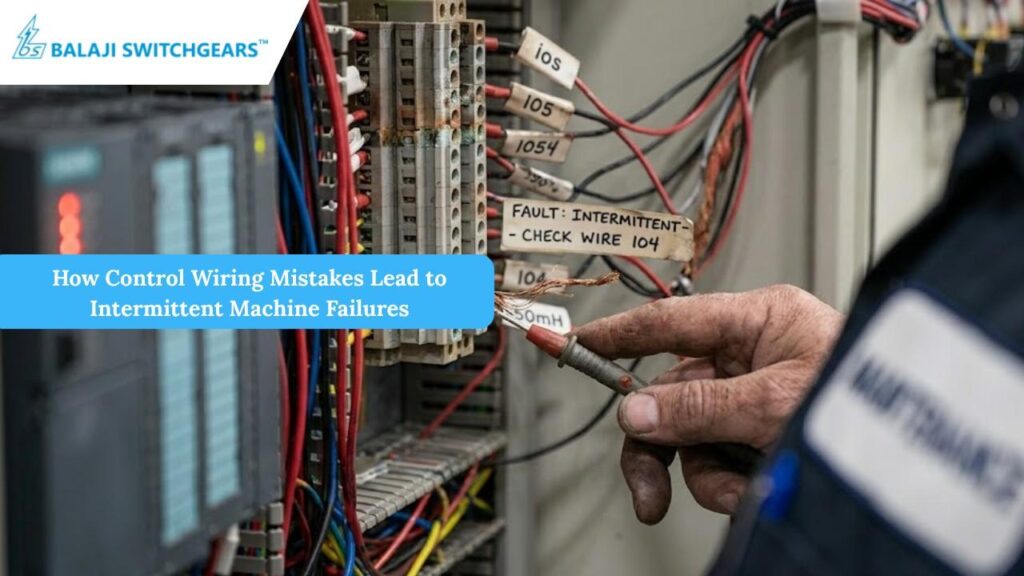
In modern industrial environments, machines are becoming increasingly automated and interconnected. From PLC-controlled systems to advanced motor drives and sensors, every process relies heavily on accurate control wiring.
While major electrical faults are easy to detect and fix, a far more frustrating issue faced by engineers and maintenance teams is intermittent machine failures. These failures occur randomly, are difficult to trace, and often result in unexpected downtime.
In many cases, the root cause lies in something seemingly simple to control wiring mistakes.
Improper wiring inside control panels can disrupt signals, create unstable connections, and lead to unpredictable machine behavior. Understanding how control panel wiring errors impact system performance is essential for building reliable industrial systems.
What Are Intermittent Machine Failures?
Intermittent failures refer to faults that do not occur continuously. Instead, they appear and disappear randomly, making them difficult to diagnose.
Common symptoms include:
- Machines stopping without warning
- Random alarms or fault signals
- Inconsistent sensor readings
- Unexpected shutdowns or resets
- Equipment works normally after restart
Because these issues are not constant, they often go undetected during routine inspections, leading to prolonged troubleshooting and production losses.
Why Control Wiring Is Critical in Industrial Systems
Control wiring forms the backbone of automation systems. It connects:
- Sensors and input devices
- PLCs and controllers
- Relays and contactors
- Actuators and motors
- Communication modules
Unlike power wiring, which handles high current loads, control wiring deals with signals often low voltage and highly sensitive.
Even a minor disruption in these signals can result in incorrect machine operation. This is why control wiring mistakes can have a significant impact on system reliability.
Common Control Wiring Mistakes That Cause Failures
1. Loose Connections
Loose terminals are one of the most common control panel wiring errors.
Over time, vibrations, thermal expansion, or improper tightening can cause connections to loosen. This results in:
- Signal interruptions
- Voltage drops
- Unstable operation
Loose connections often lead to intermittent machine failures because the connection may work sometimes and fail at other times.
2. Improper Cable Routing
Routing control cables alongside power cables without proper separation can introduce electrical noise.
This can cause:
- Signal interference
- False triggering of inputs
- Communication errors
In high-noise environments, poor cable routing is a major contributor to unreliable system performance.
3. Incorrect Wire Sizing
Using wires that are too thin for the application can result in voltage drops and overheating.
This affects signal integrity and may lead to:
- Delayed responses
- Inconsistent control signals
- Equipment malfunction
Proper wire sizing is essential to avoid such control wiring mistakes.
4. Poor Termination Practices
Improper stripping, crimping, or termination of wires can weaken connections.
Common issues include:
- Broken strands
- Loose crimps
- Incomplete contact
These faults may not be visible externally but can cause intermittent signal loss.
5. Lack of Proper Labeling
Unlabeled or poorly labeled wires create confusion during installation and maintenance.
This increases the risk of:
- Incorrect connections
- Troubleshooting delays
- Human errors
In complex panels, labeling plays a crucial role in preventing control panel wiring errors.
6. Grounding Issues
Improper grounding can lead to noise, voltage fluctuations, and signal instability.
Grounding problems may result in:
- False signals
- PLC input/output errors
- Communication failures
Grounding is especially critical in sensitive control circuits.
7. Mixing Signal Types
Combining analog and digital signals in the same cable path without proper shielding can cause interference.
This leads to:
- Distorted signals
- Measurement inaccuracies
- Unpredictable system behavior
Proper segregation of signal types is necessary to maintain system stability.
How These Mistakes Cause Intermittent Failures
The reason control wiring mistakes lead to intermittent issues lies in the nature of signal transmission.
Unlike power circuits, control circuits operate at low voltage levels. This makes them more sensitive to:
- Electrical noise
- Loose contacts
- Environmental changes
- Mechanical vibrations
For example:
- A loose wire may disconnect due to vibration and reconnect later
- Electrical interference may affect signals only under certain load conditions
- Temperature changes may expand or contract conductors, affecting connections
These varying conditions create faults that appear random, resulting in intermittent machine failures.
Real-World Impact on Industrial Operations
In industrial plants, even small wiring issues can lead to major consequences.
Production Downtime
Unplanned machine stoppages disrupt production schedules and reduce efficiency.
Increased Maintenance Costs
Intermittent faults require extensive troubleshooting, increasing labor and maintenance costs.
Equipment Damage
Frequent starts, stops, and incorrect signals can damage motors, drives, and control systems.
Safety Risks
Unexpected machine behavior can create unsafe working conditions for operators.
Identifying Control Wiring Issues
Diagnosing control panel wiring errors can be challenging, but certain methods can help.
Visual Inspection
Check for:
- Loose terminals
- Damaged insulation
- Improper routing
Thermal Scanning
Loose connections often generate heat, which can be detected using thermal imaging.
Signal Testing
Using multimeters or oscilloscopes helps identify signal fluctuations or voltage drops.
Vibration Testing
Simulating operating conditions can reveal faults caused by mechanical movement.
Best Practices to Avoid Control Wiring Mistakes
Preventing control wiring mistakes requires a disciplined approach during design, installation, and maintenance.
Proper Planning and Design
Ensure that wiring layouts are well-planned with clear segregation between power and control circuits.
Use of Quality Components
High-quality wires, terminals, and connectors improve reliability and reduce failure risks.
Correct Cable Routing
Maintain proper distance between power and control cables to minimize interference.
Secure Terminations
Ensure all connections are properly tightened and tested.
Effective Labeling
Use clear and consistent labeling for all wires and terminals.
Regular Maintenance
Periodic inspections help detect and fix issues before they cause failures.
Training and Awareness
Skilled technicians with proper training are less likely to make wiring errors.
Role of Standards in Control Wiring
Following industry standards ensures consistency and safety in wiring practices.
Standards define guidelines for:
- Wire sizing
- Color coding
- Routing methods
- Grounding practices
Adhering to these standards helps minimize control panel wiring errors and improves system reliability.
Future Trends in Control Wiring
With increasing automation, control wiring is also evolving.
Modern trends include:
- Pre-engineered wiring systems
- Modular control panels
- Smart diagnostics and monitoring
- Digital communication replacing traditional wiring
These advancements aim to reduce human errors and improve system reliability.
Conclusion
In complex industrial systems, reliability depends not only on advanced equipment but also on the quality of installation, especially control wiring. Even small control wiring mistakes can lead to serious intermittent machine failures, causing downtime, increased costs, and operational inefficiencies.
By understanding the root causes of control panel wiring errors and implementing best practices, industries can significantly improve system performance and reliability.
Careful design, proper installation, and regular maintenance are essential to ensure stable and efficient operation of control systems. For industries aiming to build robust and dependable electrical infrastructure, working with experienced solution providers like Balaji Switchgears, we ensure high-quality panel design, accurate wiring practices, and long-term operational excellence.