
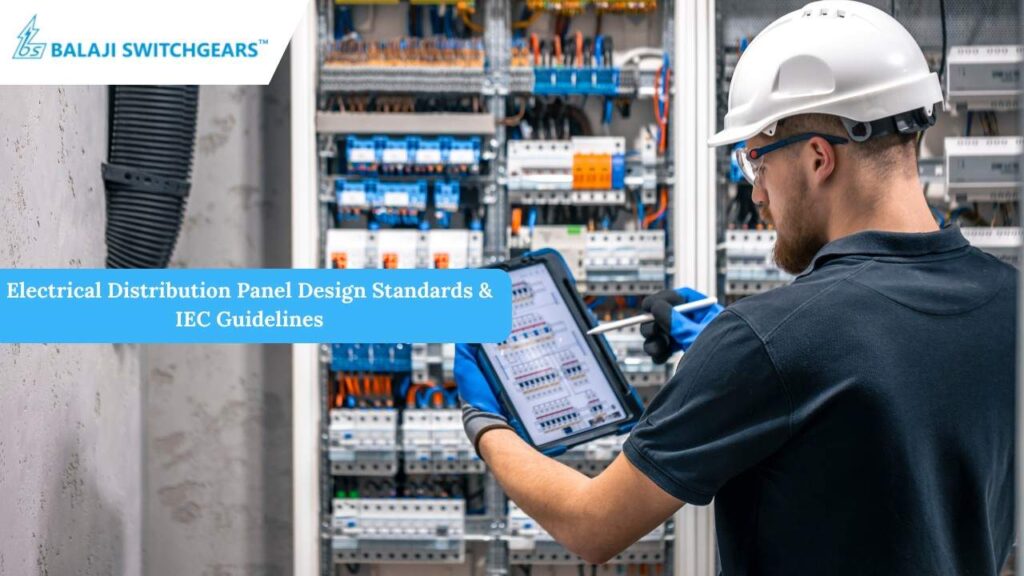
Modern electrical infrastructure depends on safe and efficient power distribution. At the heart of every industrial facility, commercial building, and utility installation lies a critical component – the electrical distribution panel. These panels manage power flow, protect electrical circuits, and ensure reliable energy delivery to connected systems.
However, designing a distribution panel is not simply about arranging circuit breakers and wiring components. It requires strict adherence to international design standards, safety regulations, and performance guidelines to ensure reliability and operational safety.
Among the most widely recognized frameworks governing electrical panel design are the IEC (International Electrotechnical Commission) standards, particularly the IEC 61439 series, which defines the requirements for low-voltage switchgear and controlgear assemblies.
In this blog, we explore the essential design standards, IEC guidelines, and engineering considerations that influence the development of safe and efficient electrical distribution panels.
Understanding Electrical Distribution Panels
An electrical distribution panel is a centralized system that receives electrical power from a source and distributes it to multiple circuits within a facility.
These panels typically include:
- Circuit breakers
- Busbars
- Protection relays
- Isolators
- Monitoring devices
- Control components
The main objective of a distribution panel is to ensure safe power distribution while protecting equipment and personnel from electrical faults such as overloads, short circuits, and ground faults.
Because these panels handle high currents and critical loads, their design must comply with strict safety and operational standards.
Why Design Standards Are Important
Electrical panels operate in demanding environments and often carry significant electrical loads. Without proper design standards, several risks can arise, including:
- Electrical fires
- Equipment damage
- System downtime
- Safety hazards for personnel
- Non-compliance with regulatory authorities
International standards ensure that electrical distribution panels meet uniform safety, reliability, and performance requirements across industries.
For panel builders, engineers, and facility managers, compliance with IEC standards ensures:
- Safe operation under normal and fault conditions
- Consistent product quality
- Compatibility across global electrical systems
- Reduced risk of equipment failure
Overview of IEC Standards for Distribution Panels
The International Electrotechnical Commission (IEC) develops global standards for electrical systems, equipment, and components.
For electrical distribution panel design, the most important standards include:
1. IEC 61439 – Low Voltage Switchgear Assemblies
This is the primary standard governing the design and construction of electrical distribution panels.
It covers:
- Panel construction requirements
- Thermal performance
- Dielectric strength
- Short-circuit withstand capability
- Electrical clearances and creepage distances
IEC 61439 ensures that panels can operate safely under expected load conditions and environmental stresses.
2. IEC 60947 – Low Voltage Switchgear Components
This standard applies to individual switching and protection devices used inside panels.
It includes specifications for:
- Circuit breakers
- Switch disconnectors
- Contactors
- motor starters
Compliance ensures that protective devices operate reliably during electrical faults.
3. IEC 60364 – Electrical Installation Standards
This standard defines installation rules for electrical systems, including wiring methods, grounding practices, and safety provisions.
It ensures safe integration of distribution panels into building electrical systems.
Key IEC 61439 Requirements for Panel Design
The IEC 61439 standard introduces several critical requirements for electrical panel construction and testing.
1. Design Verification
Before manufacturing, panel designs must undergo design verification to ensure they meet safety and performance requirements.
Verification may include:
- Temperature rise testing
- Short-circuit testing
- Dielectric strength tests
- Mechanical strength tests
These tests confirm that the panel can withstand electrical stress without failure.
2. Short-Circuit Withstand Capability
Electrical panels must be capable of handling fault currents without catastrophic failure.
IEC standards require verification of:
- Short-time withstand current
- Peak withstand current
- Busbar strength under fault conditions
Proper design ensures that panels can survive high-energy faults until protective devices isolate the problem.
3. Temperature Rise Limits
Excess heat inside electrical panels can damage insulation, degrade components, and cause system failures.
IEC 61439 requires panel designers to evaluate:
- Heat generated by electrical components
- Cooling and ventilation requirements
- Maximum allowable temperature rise
Maintaining safe operating temperatures ensures long-term reliability.
4. Electrical Clearances and Creepage Distances
Clearances refer to the minimum air gap between conductive parts, while creepage distances refer to the surface distance along insulation materials.
Proper spacing prevents:
- Flashover
- Insulation breakdown
- Electrical arcing
IEC standards define minimum clearance distances depending on voltage levels and pollution categories.
5. Protection Against Electric Shock
Safety measures must prevent accidental contact with live electrical components.
Panel designs must include:
- Protective covers
- Insulated barriers
- Proper grounding systems
- IP-rated enclosures
These features protect maintenance personnel and operators from electrical hazards.
Important Mechanical Design Considerations
In addition to electrical performance, IEC guidelines emphasize mechanical robustness.
Key design considerations include:
Panel Enclosure Strength
Distribution panels must withstand environmental conditions such as:
- Dust
- Moisture
- Temperature variations
- Mechanical vibration
Appropriate IP ratings ensure adequate protection against environmental exposure.
Busbar Design and Layout
Busbars are the primary conductors used to distribute electrical current within panels.
Key factors influencing busbar design include:
- Current carrying capacity
- Short-circuit strength
- Thermal expansion
- Insulation requirements
Proper busbar spacing also reduces electromagnetic interference and heat buildup.
Cable Management
Efficient cable routing improves both performance and maintenance accessibility.
Good cable management practices include:
- Separation of power and control cables
- Adequate cable bending radius
- Clear labeling
- Proper terminal blocks
Well-organized wiring improves troubleshooting efficiency and reduces installation errors.
Environmental and Operating Conditions
Electrical panels must be designed according to the environmental conditions where they will operate.
Factors that influence panel design include:
Ambient Temperature
High temperatures can reduce component life and increase failure rates.
IEC guidelines specify temperature ranges that panels must tolerate.
Humidity Levels
Moisture can lead to insulation breakdown or corrosion.
Panel enclosures may require sealing or dehumidification measures.
Dust and Contamination
Industrial environments often contain dust, chemicals, or metal particles.
Higher IP-rated enclosures protect sensitive components.
Altitude Effects
Higher altitudes reduce air density, affecting insulation and cooling performance.
Design adjustments may be necessary for installations in elevated locations.
Panel Segregation and Form of Separation
Modern distribution panels use compartmentalized designs to improve safety and maintenance.
IEC 61439 defines different forms of separation, including:
- Form 1 – No separation
- Form 2 – Busbar separation
- Form 3 – Functional unit separation
- Form 4 – Maximum segregation
Higher forms of separation reduce the risk of fault propagation and allow safer maintenance procedures.
Importance of Testing and Certification
Electrical panels must undergo rigorous testing before installation.
Common testing procedures include:
Routine Tests
Performed on every panel manufactured.
Examples include:
- Insulation resistance testing
- Functional verification
- Protective device checks
Type Tests
Conducted on prototype panels to validate design performance.
These include:
- Temperature rise tests
- Short-circuit withstand tests
- Mechanical durability tests
- IP protection tests
Type-tested panels ensure consistent performance across production units.
Modern Trends in Distribution Panel Design
Electrical distribution systems are evolving with new technologies and digital monitoring capabilities.
Some modern design trends include:
Smart Monitoring Systems
Digital sensors allow operators to monitor:
- Load currents
- Panel temperature
- Power quality
- Energy consumption
Real-time monitoring improves predictive maintenance and operational efficiency.
Compact Modular Panels
Modular panel designs allow engineers to expand systems easily without major redesign.
This flexibility is especially useful in industries with growing electrical loads.
Arc Flash Protection
Advanced panel designs include arc flash mitigation features such as:
- Arc-resistant enclosures
- Fast protection relays
- Remote switching mechanisms
These features significantly improve workplace safety.
Common Design Mistakes to Avoid
Despite strict standards, poor panel design practices still cause operational problems.
Common mistakes include:
- Incorrect busbar sizing
- Poor ventilation
- Improper cable routing
- Inadequate grounding
- Ignoring fault current calculations
Following IEC guidelines helps eliminate these risks and ensures optimal panel performance.
The Role of Experienced Electrical Solution Providers
Designing electrical distribution panels requires expertise in electrical engineering, safety compliance, and system integration.
Experienced electrical solution providers help organizations by offering:
- Standard-compliant panel design
- Proper component selection
- Testing and verification support
- Reliable installation guidance
Working with trusted industry professionals ensures that electrical infrastructure remains safe, efficient, and future-ready.
Conclusion
Electrical distribution panels play a vital role in delivering safe and reliable power across industrial, commercial, and infrastructure projects. Designing these panels requires a thorough understanding of international safety standards, electrical engineering principles, and IEC guidelines.
Standards such as IEC 61439, IEC 60947, and IEC 60364 ensure that panels meet strict requirements related to thermal performance, short-circuit protection, insulation coordination, and operational reliability.
By following these standards, engineers can design electrical distribution panels that:
- Maintain safe operating conditions
- Prevent electrical hazards
- Improve system reliability
- Extend equipment lifespan
As electrical systems become more advanced and interconnected, adherence to global design standards will remain essential for maintaining safe and efficient power distribution networks.For organizations seeking dependable electrical solutions, experienced providers like Balaji Switchgears play a crucial role in delivering reliable switchgear components and supporting modern electrical infrastructure.