
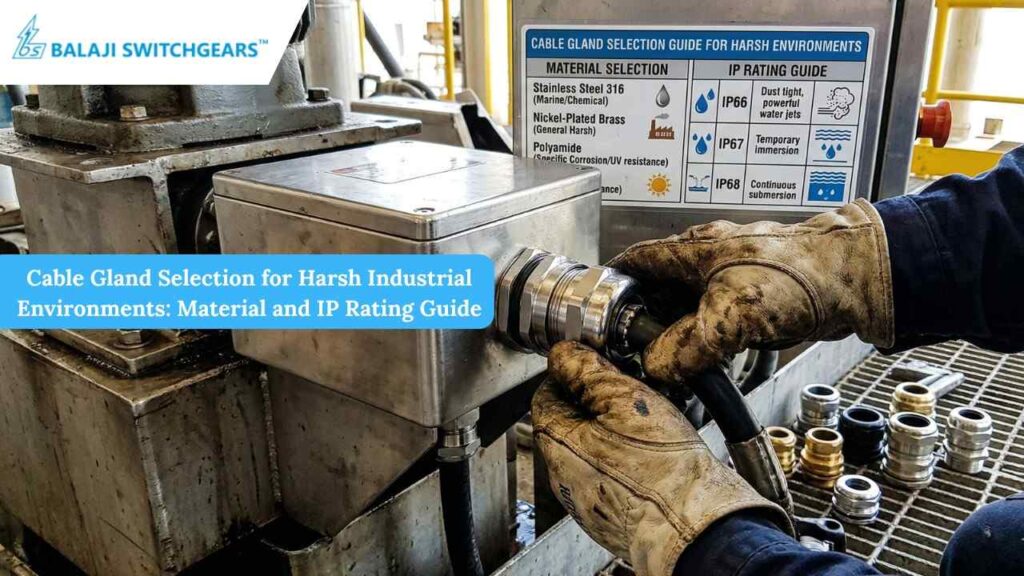
In modern industrial environments, electrical systems are exposed to some of the toughest operating conditions: extreme temperatures, moisture, dust, chemicals, and mechanical stress. While much attention is given to cables and switchgear, one small yet critical component often overlooked is the cable gland.
Proper cable gland selection plays a vital role in ensuring system safety, reliability, and long-term performance. Choosing the wrong gland can lead to cable damage, moisture ingress, equipment failure, and even hazardous situations in sensitive environments.
This blog provides a comprehensive guide to selecting cable glands for harsh industrial conditions, with a focus on material selection and understanding IP rating cable glands, along with relevant industrial cable gland standards.
What is a Cable Gland and Why is it Important?
A Cable gland is a mechanical device used to securely attach and seal the end of an electrical cable to equipment such as panels, enclosures, or junction boxes.
Its primary functions include:
- Providing a secure cable entry point
- Ensuring proper sealing against environmental elements
- Offering strain relief to prevent cable damage
- Maintaining electrical continuity and grounding
- Protecting equipment from dust, water, and contaminants
In harsh industrial environments, cable glands act as the first line of defense against environmental ingress.
Challenges in Harsh Industrial Environments
Industrial environments present multiple challenges that directly impact cable performance.
Some common conditions include:
- Exposure to water, humidity, and rain
- Dust and airborne particles
- Corrosive chemicals and oils
- High temperatures or thermal cycling
- Mechanical vibrations and impact
- Hazardous or explosive atmospheres
These conditions demand careful cable gland selection to ensure long-term durability and safety.
Importance of Material Selection in Cable Glands
Material selection is one of the most critical factors when choosing cable glands for industrial applications.
Different materials offer varying levels of resistance to environmental stress.
Brass Cable Glands
Brass is one of the most widely used materials in industrial cable glands.
Advantages include:
- High mechanical strength
- Good resistance to corrosion
- Excellent durability
- Cost-effective solution
Brass glands are often nickel-plated to enhance corrosion resistance, making them suitable for outdoor and moderately harsh environments.
Stainless Steel Cable Glands
For highly aggressive environments, stainless steel cable glands are preferred.
They offer:
- Superior corrosion resistance
- High strength and durability
- Resistance to chemicals and saltwater
- Long service life in extreme conditions
These glands are ideal for industries such as oil and gas, marine, and chemical processing.
Plastic (Nylon) Cable Glands
Plastic cable glands are lightweight and resistant to certain chemicals.
Key benefits include:
- Non-corrosive properties
- Cost efficiency
- Suitable for indoor or light-duty applications
However, they may not be suitable for high-temperature or heavy mechanical stress environments.
Aluminum Cable Glands
Aluminum cable glands are used in applications where weight is a concern.
They provide:
- Good strength-to-weight ratio
- Moderate corrosion resistance
- Suitable for specific industrial applications
Understanding IP Rating in Cable Glands
The IP (Ingress Protection) rating is a key parameter in cable gland selection. It defines the level of protection provided against solid objects and liquids.
An IP rating consists of two digits:
- First digit: Protection against solid particles (dust)
- Second digit: Protection against liquids (water)
Common IP Ratings for Cable Glands
IP65
- Dust-tight
- Protection against low-pressure water jets
- Suitable for indoor industrial environments
IP66
- Dust-tight
- Protection against powerful water jets
- Used in outdoor and heavy-duty environments
IP67
- Dust-tight
- Protection against temporary immersion in water
- Ideal for areas with occasional flooding
IP68
- Dust-tight
- Protection against continuous immersion
- Suitable for extreme environments such as underground or marine applications
Selecting the right IP rating cable glands ensures that the electrical enclosure remains protected under specific environmental conditions.
Industrial Cable Gland Standards
Compliance with industrial cable gland standards is essential to ensure safety, performance, and compatibility with global systems.
Some important standards include:
IEC Standards
IEC standards define performance, safety, and testing requirements for cable glands used in electrical systems.
ATEX Certification
Required for explosive environments such as oil refineries and chemical plants.
ATEX-certified glands are designed to prevent sparks and contain explosions.
UL Certification
Widely used in North America, ensuring safety and reliability in industrial applications.
RoHS Compliance
Ensures that cable glands are free from hazardous substances and environmentally safe.
Adhering to these industrial cable gland standards ensures that the selected gland meets regulatory requirements and performs reliably in demanding conditions.
Key Factors in Cable Gland Selection
Choosing the right cable gland involves evaluating multiple parameters beyond just material and IP rating.
Cable Type and Size
The gland must match the cable diameter and type.
Consider:
- Armored vs non-armored cables
- Cable diameter range
- Insulation type
Incorrect sizing can lead to poor sealing and reduced protection.
Environmental Conditions
Evaluate the operating environment carefully.
Questions to consider:
- Is the installation indoor or outdoor?
- Is there exposure to chemicals or moisture?
- Are temperature variations significant?
These factors influence both material choice and IP rating.
Mechanical Stress
In environments with vibration or movement, cable glands must provide strong strain relief.
This prevents cable loosening and damage over time.
Sealing Requirements
Proper sealing is essential to prevent ingress of dust and water.
High-quality sealing elements ensure that the gland maintains its IP rating throughout its lifecycle.
Earthing and Grounding
For armored cables, the gland must provide proper grounding continuity.
This is critical for electrical safety and fault protection.
Common Mistakes in Cable Gland Selection
Incorrect cable gland selection can lead to serious operational issues.
Some common mistakes include:
- Choosing a gland with insufficient IP rating
- Using incorrect material for the environment
- Improper installation techniques
- Ignoring cable size compatibility
- Not considering regulatory standards
Avoiding these mistakes ensures reliable system performance and reduces maintenance costs.
Applications in Harsh Industrial Environments
Cable glands are widely used across various industries where environmental conditions are challenging.
Typical applications include:
- Oil and gas plants
- Chemical processing industries
- Marine and offshore installations
- Power generation facilities
- Manufacturing units
- Mining operations
In these sectors, selecting the right IP rating cable glands and materials is essential for ensuring safety and durability.
Future Trends in Cable Gland Technology
With increasing industrial automation and stricter safety regulations, cable gland technology is evolving.
Emerging trends include:
- Enhanced sealing technologies
- Corrosion-resistant coatings
- Smart cable glands with monitoring capabilities
- Improved materials for extreme environments
- Eco-friendly and sustainable designs
These advancements are helping industries achieve better performance and compliance with modern standards.
Conclusion
In harsh industrial environments, even small components like cable glands play a critical role in overall system reliability. The right combination of material selection and IP rating ensures strong sealing, protection against dust and moisture, and long-term durability under challenging conditions.
Ignoring proper selection can lead to frequent failures, maintenance issues, and safety risks. But with the right approach, these problems can be avoided at the design stage itself.
Working with trusted partners like Balaji Switchgears, along with globally proven solutions from LAPP, we help ensure you get the right cable gland selection, technical guidance, and dependable performance for demanding industrial applications.