
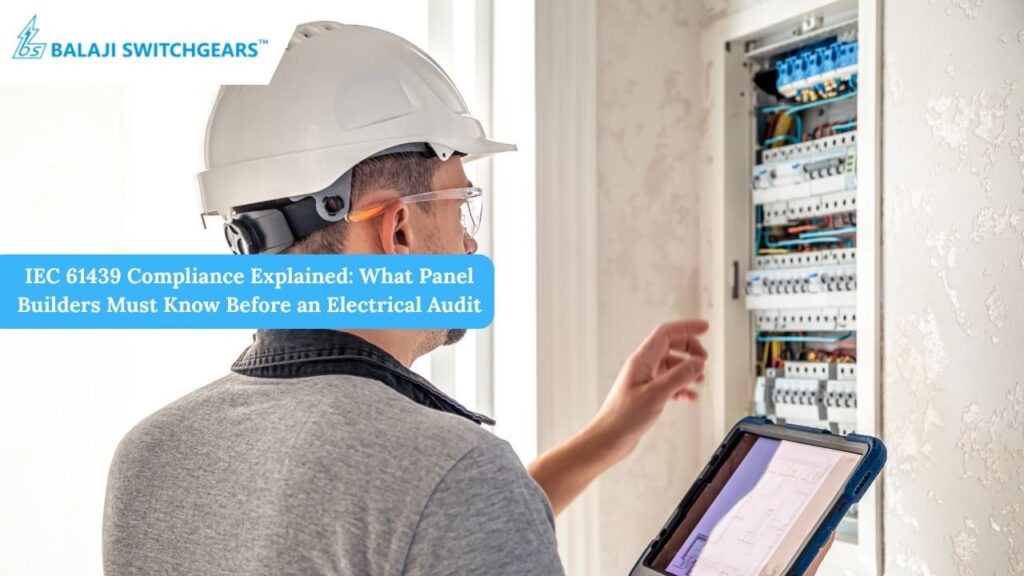
In today’s evolving electrical landscape, safety, reliability, and standardization are no longer optional – they are essential. For panel builders, system integrators, and facility operators, compliance with international standards is a critical requirement, especially when preparing for an electrical audit. One of the most important standards governing electrical panels and distribution boards is IEC 61439. This standard defines the design, construction, testing, and performance requirements for low-voltage switchgear assemblies. Understanding IEC 61439 compliance is not just about passing an audit, it is about ensuring long-term safety, operational efficiency, and system reliability.
In this blog, we break down what IEC 61439 really means, why it matters, and what panel builders must focus on before facing an electrical audit.
What is IEC 61439?
IEC 61439 is an international standard developed by the International Electrotechnical Commission (IEC) for low-voltage switchgear and controlgear assemblies.
It replaced the older IEC 60439 standard and introduced more stringent and clearly defined requirements for the design and verification of electrical panels and distribution boards.
The main objective of IEC 61439 is to ensure that electrical assemblies:
- Operate safely under all conditions
- Withstand electrical and thermal stresses
- Maintain performance over time
- Protect users and connected equipment
Unlike earlier standards, IEC 61439 emphasizes design verification and performance validation, rather than relying only on component-level compliance.
Why IEC 61439 Compliance Matters
Compliance with IEC 61439 is crucial for several reasons.
First, it ensures safety. Electrical panels handle high currents and are exposed to fault conditions such as short circuits and overloads. Without proper design validation, these faults can lead to fire hazards, equipment damage, or serious injuries.
Second, it improves system reliability. Panels built according to IEC 61439 standards are tested to perform under real-world operating conditions, reducing the risk of unexpected failures.
Third, compliance is often mandatory for project approvals and audits. Many industries, consultants, and regulatory bodies require IEC-compliant distribution boards as part of their technical specifications.
Finally, it enhances credibility. For panel builders, following IEC standards demonstrates professionalism, engineering capability, and commitment to quality.
Key Concepts in IEC 61439
To understand IEC 61439 compliance, it is important to focus on its core principles.
1. Design Verification
One of the most important requirements in IEC 61439 is design verification.
This ensures that the design of the electrical panel meets all performance and safety criteria before it is manufactured.
Design verification can be done through:
- Testing
- Calculation
- Comparison with a verified design
It includes checks for temperature rise, short-circuit strength, dielectric properties, and mechanical performance.
2. Routine Verification
While design verification validates the design itself, routine verification is performed on every panel produced.
This ensures that each individual panel meets the required quality and safety standards.
Routine tests typically include:
- Inspection of wiring and connections
- Functional checks
- Insulation resistance testing
- Verification of protective circuits
These checks are essential before delivering the panel for installation.
3. Assembly Responsibility
IEC 61439 clearly defines the role of the panel builder (assembly manufacturer).
The responsibility lies with the builder to ensure that:
- The complete panel meets IEC requirements
- All components are correctly integrated
- Design and testing documentation is maintained
Even if certified components are used, the final assembly must still be verified as a complete system.
Critical IEC 61439 Requirements for Electrical Panels
For panel builders preparing for an audit, certain requirements are particularly important.
Temperature Rise Limits
Electrical panels generate heat due to current flow. Excessive heat can damage insulation and reduce equipment life.
IEC 61439 requires verification that temperature rise remains within safe limits under full load conditions.
Proper ventilation, spacing, and component selection play a key role in meeting this requirement.
Short-Circuit Withstand Strength
During a fault, electrical panels must withstand high short-circuit currents without failure.
The standard requires verification of:
- Busbar strength
- Mechanical stability
- Thermal endurance
This ensures that panels can safely handle fault conditions until protective devices operate.
Dielectric Properties
Panels must provide adequate insulation to prevent electrical breakdown.
IEC 61439 specifies requirements for:
- Insulation resistance
- Withstand voltage
- Clearance and creepage distances
These parameters are essential for preventing flashovers and ensuring safe operation.
Protection Against Electric Shock
Safety is a core focus of IEC 61439.
Panels must be designed to prevent accidental contact with live parts.
This includes:
- Proper enclosure design
- Use of insulating barriers
- Effective grounding systems
For distribution boards, this is especially critical as they are often accessed for maintenance.
Degree of Protection (IP Rating)
Electrical panels must be protected against environmental factors such as dust and moisture.
IEC standards define IP ratings that indicate the level of protection provided by the enclosure.
Selecting the correct IP rating depends on installation conditions, such as indoor or outdoor environments.
Common Audit Challenges for Panel Builders
Many panel builders face challenges during IEC 61439 audits due to incomplete understanding or improper implementation.
Some common issues include:
- Lack of proper design verification documentation
- Incorrect busbar sizing
- Inadequate thermal management
- Improper cable routing
- Missing routine test records
These issues can lead to audit failures and project delays.
To avoid such problems, it is important to follow a structured approach to compliance.
Documentation Requirements
One of the most critical aspects of IEC 61439 compliance is documentation.
During an audit, panel builders must provide clear and complete records, including:
- Design verification reports
- Test certificates
- Component specifications
- Circuit diagrams
- Bill of materials
- Routine test results
Proper documentation not only ensures compliance but also builds confidence with clients and consultants.
Best Practices for IEC 61439 Compliance
Achieving compliance requires a combination of technical knowledge, quality control, and process discipline.
Some best practices include:
Standardized Design Approach
Using pre-verified designs helps ensure consistency and reduces the risk of errors.
Proper Component Selection
All components used in electrical panels and distribution boards must meet relevant standards and be suitable for the intended application.
Thermal Management Planning
Adequate ventilation, spacing, and heat dissipation methods should be incorporated during the design stage.
Training and Awareness
Panel building teams should be trained in IEC 61439 requirements and testing procedures.
Regular Internal Audits
Conducting internal checks before external audits helps identify and resolve issues in advance.
Importance of Partnering with Experienced Providers
For many organizations, achieving full IEC compliance can be complex.
This is where experienced electrical solution providers play a key role.
Working with industry experts ensures:
- Proper panel design and engineering
- Accurate compliance with IEC standards
- Reliable component selection
- Smooth audit processes
Companies like Balaji Switchgears bring expertise in delivering high-quality solutions aligned with modern standards for electrical panels and distribution boards.
Their experience helps ensure that systems are not only compliant but also efficient and future-ready.
Future of IEC Standards in Electrical Panels
As electrical systems evolve, IEC standards continue to adapt to new technologies and challenges.
Future developments may include:
- Greater focus on energy efficiency
- Integration with smart monitoring systems
- Enhanced safety requirements
- Improved testing methodologies
Panel builders must stay updated with these changes to remain competitive and compliant.
Conclusion
IEC 61439 compliance is more than just a regulatory requirement, it is a foundation for safe, reliable, and efficient electrical systems.
For panel builders, understanding the requirements of IEC 61439 is essential before facing an electrical audit. From design verification and testing to documentation and quality control, every aspect of panel construction must align with the standard.
By following best practices and maintaining a structured approach, panel builders can ensure that their electrical panels and distribution boards meet international safety and performance expectations.
With the right expertise and support from trusted providers like Balaji Switchgears, organizations can confidently achieve compliance, pass audits, and deliver high-quality electrical solutions that stand the test of time.